Resizing maps to a 50-pixel grid

One of my few complaints about MapTool is that you can’t really export a map from one campaign to another. You can duplicate a map within a campaign, but there’s no good way to get it into another campaign. Also, if you want to create maps to share with other virtual table top users, it’s nice if you can have them pre-formatted to a certain size.

Thanks to a useful video and message board post from Eugene of the Fantasy Grounds forums (as well as from EN World), I learned a straightforward way to take maps that I’ve created in MapTool and turn them into JPGs both with and without grids so that they can be easily used by others and by myself in other campaigns.

0. Open up MapTool, Paint.NET, and this Excel tool (or a calculator).

1. In MapTool, center your screen on the map you want to export.

2. Choose the Measure Distance Along Path tool. This has two useful purposes: It makes the Layer window disappear, and it lets you count the number of squares on your map (this will be useful later).

3. Make your MapTool window full-screen by hitting CTRL + ALT + ENTER

4. Zoom in as far as you can without losing any of your map.

5. Hit the Print Screen key.

6. Alt Tab over to Paint.net and choose Edit – Paste Into New Image

7. Alt Tab back to MapTool, hit CTRL +G to make the grid go away, and hit Print Screen. Then Alt Tab back to Paint.net and again choose Edit – Paste Into New Image (you’ll have two separate image files in Paint.net – one with the grid and one without).

8. In the Paint.net image file with the grid, choose the Rectangle Select tool, zoom in pretty far, and scroll to the far left side of the map. Click (and hold) on the vertical grid line on the left side of the farthest-left complete square.

9. Drag the mouse all the way over to the right edge of the map, selecting all the way until you get to the vertical grid line on the right side of the farthest-right complete square. Release the mouse having selected right up until (but not counting) that rightmost grid line.

10. Look at the bottom of the screen and note the horizontal dimension (the first number) of the Bounding Rectangle Size. Look to the right of that at the bottom of the screen (not ALL the way to the right, as that’s the current X/Y position of the cursor) and note the horizontal dimension of the total image size.

11. Alt Tab back to MapTool and hit CTRL+G to turn the grid back on. Using the Measure Distance Along Path tool that is currently active, click and drag along a row to count the number of complete squares on the screen. You’ll need to add 1 to the running total (since the first square counts as zero).

12. In the Excel file, enter the first number you noted in Paint.net in the Selected Pixels box, the number of squares you got out of MapTool in the Selected Squares box, and the second number you got out of Paint.net in the Total Image Size box. The big number at the bottom tells you the new image size you’re looking for. The formula is:

New Image Size = Total Image Size * Number of squares selected * Desired grid size / Selected pixels
OR
New Image Size = Total Image Size * 50 / (current number of pixels per square)

13. In Paint.net, go to the gridded image and choose Image – Resize. Enter the New Image Size in the Width box (making sure the Maintain Aspect Ratio box is checked) and click OK. The image will resize.

14. Crop the image as you wish, then save it as a JPG file in a directory that you’ve taught MapTool to look for.

15. Repeat 13 and 14 for the gridless image file (the new dimension will be the same as for the gridded file).

16. Enjoy your new map files!

Reavers of Harkenwold – complete MapTool file

Since I ended up putting all of my Reavers of Harkenwold maps into an easy-to-import format and since I had saved almost all of the MapTool monster tokens I had created for the adventure, I figured I might as well bring it all together in a complete MapTool campaign file.

The linked file (which was created in MapTool version 1.3.b66) contains:

  • A big map with all of the individual encounter maps on it (feel free to copy these to separate maps within MapTool if you prefer
  • One copy of each monster and NPC token that I created for the adventure (CTRL+C and CTRL+V will make more)
  • Complete stats and attack macros for all of the monsters on their tokens
  • A generic monster token and a generic player character token
  • Campaign macros for basic things like dice rolling and toggling conditions on and off the tokens

Now, I’ll admit that there are a few things it doesn’t contain

  • A couple of maps are not present, as I didn’t use them in my run-through of Reavers of Harkenwold
  • A couple of monsters are missing (I believe the underground goblin leader is one, and there may be a couple of others) – I simply failed to save them after I’d created them
  • Not every monster is quite as fleshed out as I’d like (senses, equipment, etc.) but they’re totally ready to use (they’ve got hit points, defenses and attack macros, which is the important stuff).

Note that this by no means replaces the adventure itself. If you want to run Reavers of Harkenwold, you still need to get your hands on a copy of the adventure (there’s no background information or even information about which monsters appear in which encounter). This is just a tool to help you run it online.

If you happen to run Reavers using this campaign file, I would LOVE to hear about it! I had a ton of fun with the adventure, and this file should let you pick it up and go (assuming you’ve at least read through the adventure so that you know what the plot is!).

Download the Reavers of Harkenwold MapTool campaign file here.

D&D Encounters Dark Legacy of Evard – Week 1

I’ve volunteered to run D&D Encounters for the Dark Legacy of Evard season that began today. I’ve only played one session of Encounters before, but the store owner, Jeff, was trying to recruit enough DMs so that we could run four tables per night and still be able to have DMs alternate weeks (so, eight DMs total). One encounter a week shouldn’t be too hard to prepare, so I gave it a go.

Setup

I got the adventure last Friday and gave the first chapter a read-through. The Encounters adventure comes with poster maps and tokens, but if you’ve been following my blog, you know that I love to run games using my projector setup and MapTool. So, I began creating maps in MapTool and programming up the monsters.

Players

For tonight’s session, we had six players, which meant that we were only going to run one table. I was the first DM there, so I was fortunate to be able to run my game. Four of the players were Encounters veterans, but two were not.

The first of these newcomers was my wife, Barbara! We’ve played D&D together many times over the past year and a half that I’ve been involved with the game, but this is the first time she’s participated in public play. Huzzah!

The second newcomer was David, a complete newcomer to D&D4e. He had played a little bit of D&D 3.0 years ago, but he was really coming to the game fresh. Excellent!

The story – SPOILERS AHEAD

Tonight’s session started off with the party introducing themselves to one another. They were on a weeks-long journey to take some messages from the leader of Fallcrest to far-off Sarthel. Some of the players decided that they were actual couriers while others were either guards or hangers-on. One was a Revenant who, it was decided, had been found by the party near the side of the road a few days prior with no memory of his previous life.

It was a quiet evening in the Old Owl Inn in the town of Duponde, and the adventurers were resting and waiting a few days for the bridges over the Nentir River to be repaired so that they could continue on toward Sarthel. They spent some time chatting with other travelers and locals about the spooky weather and hearing rumors about the ghost of the shadow wizard Evard whose grave is in Duponde. The innkeeper and a visiting scholar told them some of the tales, and the group eventually went to bed.

In the middle of the night, everyone woke up to a strange feeling of being pulled in odd directions, the temperature dropped, and lights began functioning poorly. A scream came from downstairs in the common room. The adventurers geared up and went down to investigate

The battle

They arrived to find the old bartender knocked out behind the bar while a quartet of gargoyles, animated incarnations of the statues that adorned the front of the inn, flew around the room wreaking havoc. Battle ensued.

The encounter map (no grid)

The Shade Executioner in the group snuck up behind one of the statues and grabbed it with his garrotte, nearly killing it outright. Our Half-Orc Knight waded into combat to challenge a pair of monsters. The Revenant Hexblade found himself on the wrong end of a gargoyle attack and was knocked to the ground and dazed – and bloodied. He fought back from the ground with his single action on his turn. Our Drow Hunter finished off the gargoyle that had been garrotted.

At the end of the round, a pair of shadow creatures emerged from the darkness and attacked. One of them melded into the shadow of the Knight, dealing him some necrotic damage, while the other melded with the prone Revenant, taking his hit points into negative territory, but not dropping him to unconsciousness yet (Revenants get to keep fighting until they fail a death saving throw).

These shadow creatures turned out to be pretty tough – hard to hit when they were melded with characters, and insubstantial unless hit with radiant damage (which no one in the party could deal). The gargoyles started dropping, but one of them ignored the Knight’s mark to go after the prone Revenant (who, remember, was at negative hit points, but still fighting) – and killed him outright. Negative bloodied value, dead-dead. (This is only the second time I’ve killed a PC as a dungeon master.)

Truly scared now, the remaining five party members did what they could to finish the fight quickly. Our Drow Hunter provoked an opportunity attack from a shadow (a hit – the first against him – bloodied the Hunter) and succeeded in dazing the monster. That shadow was soon finished off, but its partner came after the Drow and knocked him unconscious. The Knight had been brought back from unconsciousness by the Half-Elf Sentinel already, and then fell yet again to the shadows before the Sentinel eventually stabilized him.

Ultimately, our Shade Binder dealt the killing blow to the last shadow monster, and the survivors could catch their breath.

Thoughts

This was a brutal encounter. We lost one PC, although had it been anything other than a Revenant who kept fighting while at negative hit points, we might not have actually lost anyone. Two other PCs ended the fight unconscious, and one was bloodied. The Shade Binder somehow escaped the fight unscathed (my wife’s character, but I swear I didn’t go easy on her – she just stayed out of the way). The Drow Hunter (David, the first-time player) spent four healing surges at the end of the fight and now has a grand total of two remaining for the next three encounters. The Knight took a total of over 60 damage during the fight (hey, achievement!). Brutal, brutal, brutal.

In talking to the players who had played D&D Encounters before, it sounded like the only similarly tough first session was Dark Sun (which I had read about, and I understand that Dark Sun was supposed to be vicious). This felt like a pretty random battle, but man, was it tough. I guess the Shadowfell is meant to be an unhospitable place.

All that said, I think that this party’s particular makeup was not well suited to this encounter. We had multiple controllers, but there were no minions. We had only one defender, and he took a ton of punishment. We had only one leader, and extra healing would have been really helpful (rest in peace, Revenant). And of course, we had no divine characters, so no one could deal radiant damage. A cleric would have rocked against those shadow creatures, but the party had to slog it out the hard way, dealing with the insubstantiality of the shadows.

Wrap-up

All that said, the players legitimately seemed to have a good time, and the newcomer said that he plans to come back next week, bringing a friend. I had fun running the encounter, and I’m looking forward to the next one. I already have set up the first three encounters in MapTool, and I hope to get all 13 in there over the next few weeks. The adventure looks like a lot of fun, and I could definitely see running it again for a home campaign.

The encounter map, with a grid

Reavers of Harkenwold Maps

Edit: This post was updated on 5/14/2011 to change the maps to a 50 pixel per inch scale and to provide gridless versions of the maps (which, frankly, are the better choice for dragging into MapTool or Fantasy Grounds or whatever you use). Also, if you want the full MapTool file for this adventure, go here.

I ran the Reavers of Harkenwold adventure from the Dungeon Master’s Kit using MapTool over the past few months and had a great time with it. In the process, I needed to create MapTool versions of these maps, and I thought that others who are running the adventure using online tools might be able to make use of them. Enjoy!

Each map can be clicked for a larger version, and the printable PDF links for each map will bring you to a version that is formatted in printable one-inch square scale

Main overland map (printable PDF)

Road with wagon (printable PDF)

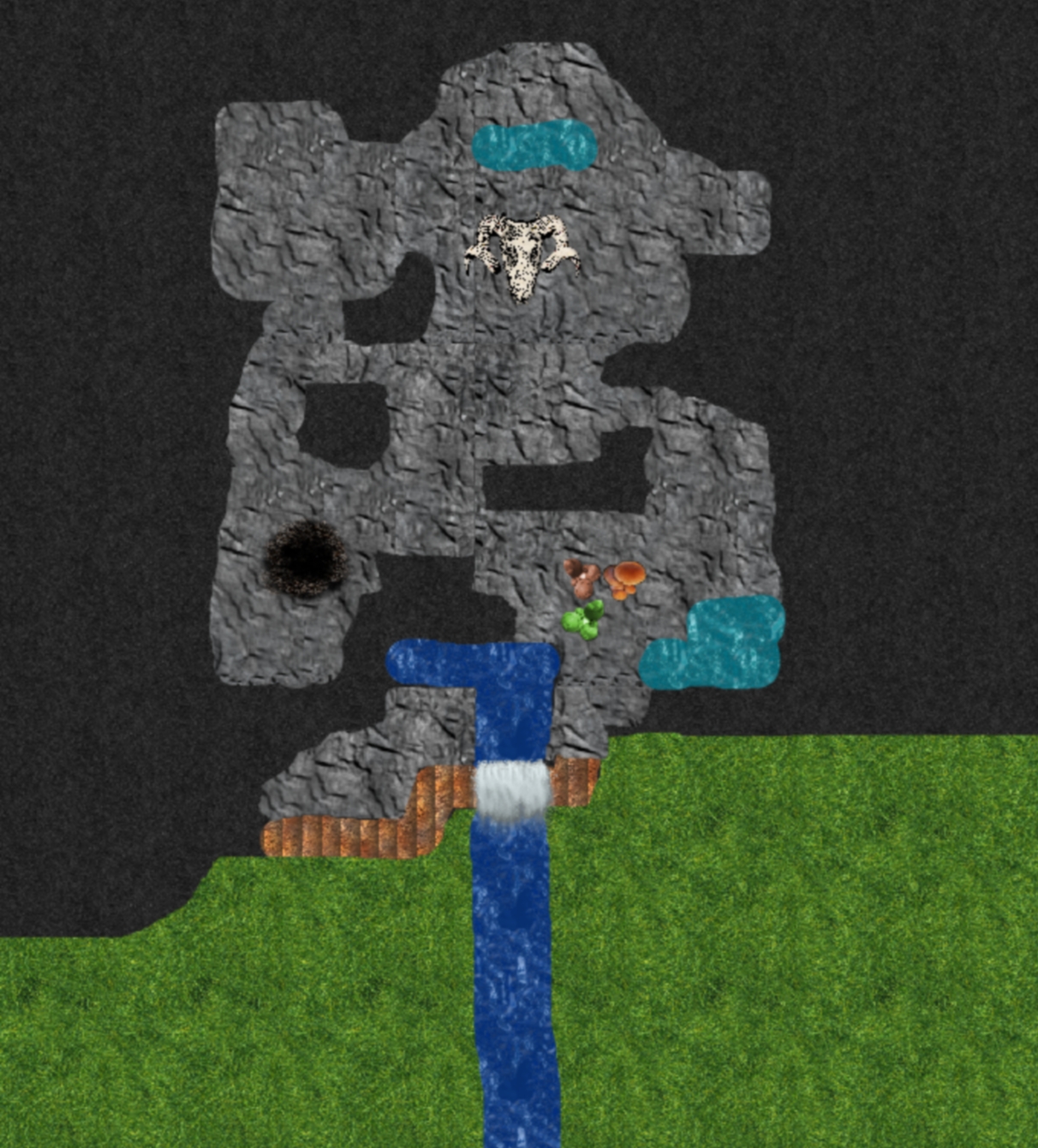
Toadwallow Caverns (printable PDF)


Ring of Stones (printable PDF)

Underground Lab (printable PDF)


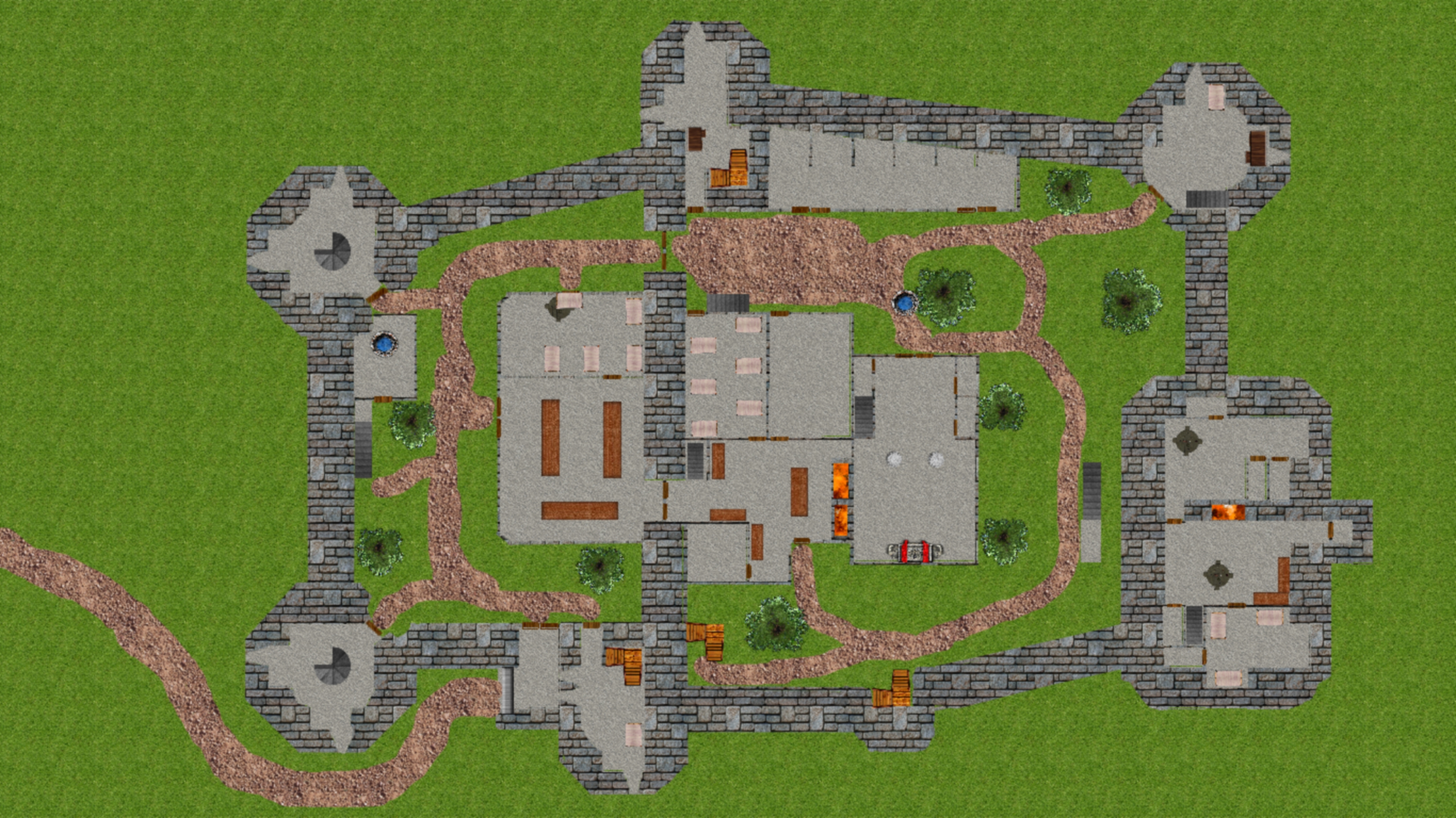
Iron Keep main level (printable PDF)


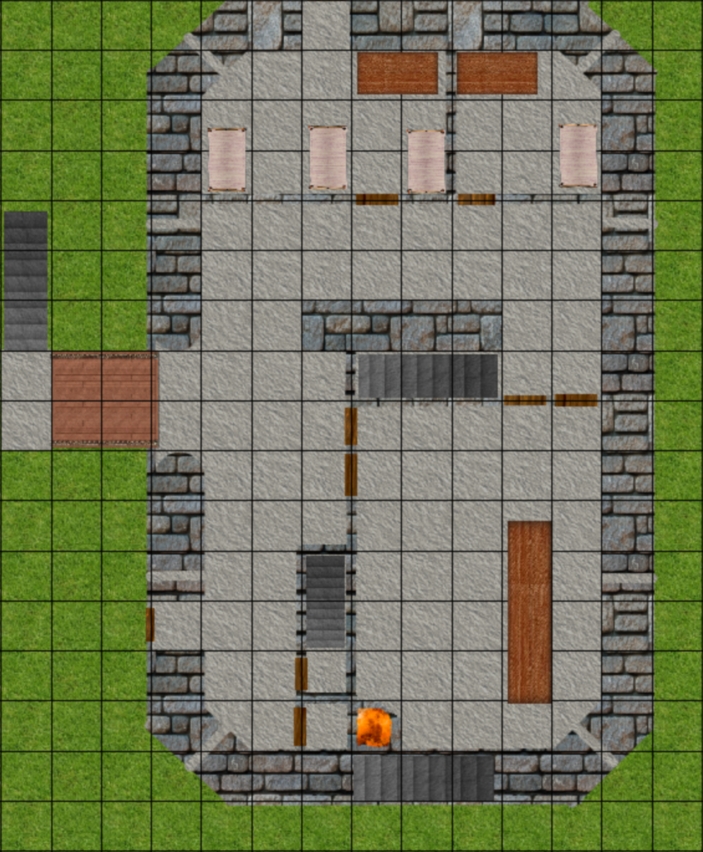
Iron Keep second and third floors (printable PDF)

Third Floor

Free encounter (with map and monsters): Steeder Breeder

I had fun posting a full adventure here last week, so I thought I would follow it up by posting a single encounter that I ran in a recent home game.

The encounter is called Steeder Breeder, and it is inspired by the monsters of the Advanced Dungeons and Dragons module “The Gates of Firestorm Peak.” I adapted parts of that adventure for use in my Dungeons and Dragons 4th Edition home campaign, including this encounter.

The encounter pits the players against a duergar spider master and his beasts – giant riding spiders called Steeders, along with young versions of those creatures. Full stats for the monsters are included in the adventure, along with an encounter map.

Please let me know any feedback you have on this encounter, the map or the monsters. Should I continue publishing this sort of thing in the future?

Download the full encounter here.

Monster: Duergar Spider Master

Map: Steeder Breeder encounter

Free D&D4e Adventure: The Staff of Suha (aka The Stolen Staff)

Edit 9/8/2011: I’ve updated this adventure; the new version is called The Stolen Staff, but it’s the same adventure. You can find more about it with updated maps at this link.


At Genghis Con this past weekend, I ran two Living Forgotten Realms games. One of them was a MyRealms game that was an adaptation of a non-Realms home game I had run a few months ago. The updated version ended up being a lot of fun to run, so I’ve cleaned it up and posted it here as an ordinary adventure for the world to use.

Download the full adventure here.

The adventure is called the Staff of Suha (edit: now The Stolen Staff). It’s a pretty straightforward delve, aimed at characters of around 5th level (give or take a level or two).

The party is summoned to the manor home of a minor noble named Charles Suha for a job. Charles explains that a family heirloom, the titular staff, was stolen three nights ago by what appeared to be a band of orcs. He asks the party to track the orcs down and recover the staff. Doing so requires that the PCs infiltrate the orc stronghold and fight their leader, Grak.

The PDF above has all of the details of the adventure, monsters, maps, etc. If you want bigger maps for use in a game table program, those are below. And if you want the MapTool file that I used to actually run the game, you can download that here (note that it is built using MapTool version 1.3b66).

I’d really appreciate feedback on this adventure. I’ve never shared a complete adventure before, and I’m curious to see what other people think. Any feedback, positive or negative, is very welcome.

And if you end up actually USING this adventure, please tell me how it goes at your table!

Overview map

Guard tower / Garbage pit

Temple

Grak’s Chamber

Creating D&D converts

Ah, the Christmas season.  That magical time of year when friends and family gather together and give the D&D fans in their lives the chance to talk about what a fun game this is and to turn them into brand-new gamers.

My wife’s brother and his family are staying with us for two weeks over the holidays.  My wife and I talked about D&D several times in the first few days of their visit, and they were interested in hearing more.

I received the Castle Ravenloft board game for Christmas, and my brother-in-law and I played it a couple of times .  Castle Ravenloft is a pretty good introduction to the concepts of D&D 4th Edition:

  • You have a standard and move action on your turn, with the option to turn the standard into a second move
  • You roll a d20, adding a modifier and comparing it to an armor class
  • There are D&D classes with the appropriate roles and flavors
  • There are D&D monsters with reasonable approximations of their feels

My sister-in-law joined in a five-player Castle Ravenloft game on the evening of Christmas Day, and while she was a little overwhelmed, she seemed to enjoy it.

So, the day after Christmas I showed them the online Character Builder (figuring that Essentials characters would be better for beginners) and helped them roll up their very first RPG characters.  My brother-in-law went with an elf hunter ranger named Homer, while my sister-in-law created a half-elf warpriest named Stasi.  My wife rolled up the sister of her beloved swordmage (another swordmage named Sora), and everyone was anxious to try out their new toys.

Sunday evening, the day after Christmas, we all sat down at the gaming table to really introduce my family to D&D.  I gave my in-laws a choice of three different low-level Living Forgotten Realms that I had prepared on the computer (using MapTool and my projector setup to run the game), and they chose to play a Luruar adventure in which they would be helping people at a magical college shore up some problems underground (LURU 2-3 Forgotten Crypts, Hidden Dangers, which I’ll be running at my friendly local game store this evening).  While my wife finished putting her character together, I ran my in-laws through a simple encounter with some orc minions, just so they got a feel for how battle works.

And then we were off!  We ran through the entire LFR adventure, with me scaling it down for 3 PCs on the fly.  Apparently I did a lousy job with the scaling, as I managed to kill off my brother-in-law’s character in the first battle (only the second time I’ve killed a PC).  All three of the bad guys in the battle had the ability to deal ongoing damage, and all three players had a horrible time with their saving throws.

The party decided that they wanted to take the dead character out of the catacombs and get him resurrected (rather than either give up or create a new character).  I introduced a cleric at the magical college who would resurrect him in exchange for a promise that they would work off the debt for the resurrection later.  The living PCs accepted the deal, but used some good diplomacy to persuade the cleric to give them a discount because the dead PC was working for the same organization as the cleric.  Good stuff!

Back into the catacombs, and the party made it through a skill challenge to get to the lair of the big bad guy.  They realized that the room was trapped, and they killed off the monster from the first battle that had caused them so much trouble before fleeing (a Kobold Rat Master, quickly renamed Rat Bastard).  They then retreated and took a short rest before coming back for the last two bad guys.  I had those characters move to a different part of the catacombs, and I’m glad I did – the original room for the final fight is pretty boring for the PCs if the trap is in effect.

They had such a good time on Sunday, that they asked what was next for the party on Monday!  They made it clear that they were really interested in the setting and wanted to do some more adventuring there, so I took a half day off work on Monday to whip up a brand-new adventure for them, which we ran Monday night.

This new adventure was a much better balance for the three-PC party.  They fought zombies, tracked some wraiths, bypassed a skeletal dragon (though they were sorely tempted to fight it), chased some skeletons through a series of rooms, and ultimately came to the crypt of a ghost who was using some portals to channel necrotic energy and bring more wisp wraiths into the world.  I’m quite proud of this encounter – it worked out even better than I had hoped.  I’ll write about it in more detail sometime – maybe I’ll write up the whole adventure as a PDF.

Anyway, I’ve created two new D&D players!  Now the trick will be to figure out how to keep their gamer fires burning.  We’ll probably play a little Gamma World before they head home, and maybe find time for one more D&D adventure (though I won’t have time to write a whole new one from scratch).  Maybe we’ll play using MapTool after they go home – who knows?  It’s been a fun experience so far, and I hope we get to play more in the future.

Virtual Table issues so far

Since getting my invitation to the Dungeons and Dragons Virtual Table beta a few days ago, I’ve had a chance to dig into the program a little bit more.  I’ve put together two encounters, and I plan to run one or both of them Monday evening at 7:00 PM Mountain Time (so if anyone is interested, feel free to join the game – look for 4e Home Encounters).  Keeping in mind that I’m spoiled by all of the features of MapTool, there are the issues I’ve discovered.

The obvious limitation at the moment is on the map creation side of things.  The Virtual Table has a few Dungeon Tiles to choose from, and I think it’s pretty clear that they plan to make Dungeon Tiles the main mapping tool in the future.  I won’t be surprised if they charge DMs to get access to new Dungeon Tile sets or something like that, but that might be overly pessimistic on my part.  The current Dungeon Tiles that are available are all for underground maps, and the maps I’m making right now are wilderness maps, so the tiles are useless for me at the moment.  The drawing tools that are available are… well, think “crayon drawing” and you’re on the right track.  I’m sure this will get better eventually, but it’s pretty painful right now.

The panels cannot be resized, which is a pain.  In MapTool, you can resize all of the various windows however you wish.  In Virtual Table you can either have the panel on the right side of the screen displayed or hidden, but not stretched or condensed.  That’s a big pain when you’re trying to select from multiple monsters in that panel that have similar names (Blackwinter Wolf, Blackwinter Wolf Pack Leader… they look very similar when their names are truncated).  Yes, you can get around it by abbreviating names, but it’s still a pain.

There’s no way to manipulate multiple tokens at once.  For instance, I’d like to be able to start with a map where all of the monsters are invisible (note: you CAN make monsters invisible, which is a good feature) and then highlight all of them and make them all visible at once, rather than having to click on each individual token and navigate through its menu to make that one token visible.  If the battlefield has a bunch of minions on it, this is just a pain in the butt.

On a related note, a useful MapTool feature that the Virtual Table currently lacks is a “View as player” option for the DM to look at the map.  When I’m drawing a map and I’ve set certain features to be visible to the players and others to be invisible, it’s VERY helpful to have a way for me to see what the map will look like to the players.  My Friday night players can tell you stories about the times that I’ve talked about the window that the bad guys are jumping out of or the wall of fire that’s coming toward them, only to find out that said window and wall of fire were invisible to my players!  Oops.  Not having a way to check that will make these issues crop up more frequently in the Virtual Table.  This is especially true since making parts of the map visible or invisible doesn’t discernably change anything that I’ve been able to see in the DM view.

Selecting a token is also a little strange.  You can click on a token and move it around and adjust its hit points, but its powers don’t show up on the right side unless you right click on the token and choose “View Token Detail” or select the token name from the monster drop-down.  This is something that should be automatic on a double-click or even a single-click.  Click the token, and its details should appear in the right panel (attacks, notes, etc.).

I like the fact that editing one copy of a token edits all of them.  If I add a new power to a token of which there are already five on the map and then save that change, all five of those tokens have the new power.  However, I believe it is impossible to edit a token’s image once you’ve created it.  I’m sure they’ll change this someday, but it’s a pain for now.

Finally, given that I like to run games in-person using MapTool and my projector, I would REALLY like a full-screen mode that I can run in a second window of the Virtual Table to put onto the table for the players to see.  There’s no full-screen mode right now, and even if there were I’m pretty sure I would need a second D&D Insider subscription in order to be able to run both the DM version of the campaign and the player version at the same time.  Obviously this is not the targeted use for the Virtual Table, but it would still be nice to have.  I’d also need to be able to run it without being connected to the internet (such as at a convention), which is probably never going to happen.

Overall impressions

So far, I’m impressed that there don’t seem to be many bugs per se in the Virtual Table.  Its features are limited, but the features that are in the tool all seem to work properly.  The features are SO limited, though, that playing with this program compared to something like MapTool is just a huge pain.  I’m going to keep playing with it just so I can get to know the tool, but there’s no way that I’m going to switch any of my regular games to it any time soon.

The killer features that the Virtual Table will probably be able to offer eventually are:

  • Automated character and monster importing from DDI tools
  • Full selection of Dungeon Tiles for quick map construction
  • An integrated lobby to find a game

Until these features come about, though, there’s no reason to use Virtual Table over MapTool except for curiosity and a desire to make the program better.  For those of you who don’t have beta invites yet and worry that you’re missing out – you’re not, unless you just like playtesting.  MapTool and its ilk are far better for now.  But the Virtual Table has potential to surpass them someday if those killer features get added.

In the mean time, I will keep playing with the program and posting updates here.  Actually running a game will be enlightening, I’m sure!

Finishing the Fire Forest (maps included)

Last night, my weekly online D&D 4e party finished the Fire Forest adventure, which is the second adventure in the War of the Burning Sky Series.  We only had four of the five players (sorry you couldn’t make it, Jaks!) but we played on for the climactic final encounters.

SPOILERS AHEAD

I haven’t written about each week of this adventure as I had the previous one, so I thought it would be good to recap our experiences.  The Fire Forest starts off with a couple of encounters with creatures of the forest that have been affected by the everlasting flames.  Amusingly, the very first encounter has two different fiery creatures fighting one another… with no way to hurt each other!  All of their attacks deal fire damage, and they’re immune to fire.  Oops.  Anyway, these encounters are good for giving the party a flavor of the Fire Forest, but that’s about all.

A devil, hired by the empire that is chasing the party, pops up a few times to harass and taunt the players before disappearing.  He ended up be an interesting little NPC to play with, but the party did finally get a shot to finish him off (I gave him a 50/50 shot of fighting for one more round or teleporting away – the dice said that he chose to fight, and die).The party met a dragonborn sorcerer who was researching the forest fire and attempting a ritual to put out the fire in a dryad’s grove.  The party went into some caverns to collect some mushrooms and flint that the sorcerer needed for the ritual and ended up fighting some fungus creatures.  They also found some treasures here, including a magical badge on the body of an eladrin knight.  There was a book that was discovered and discarded by the none-too-intellectual shaman in the party (I was amused by this later when we talked about it out of character).  The party helped the sorcerer put out the burning grove, though he was swallowed by the earth and surrounded by more fungus creatures that the adventurers went down to fight off.  This was a combined combat encounter and skill challenge, and I think it went pretty well.

Leaving the sorcerer to recuperate from his wounds, the party continued deeper into the forest and was contacted by a creature calling itself Indomitability, asking the party to silence some singing elves at a lake whose song was keeping him trapped in the forest.  The party agreed to help the creature (sort of).

Next up was a bridge crossing a wide river, with a tower in the middle of the bridge.  A magical mace trap made it hard to get into the tower, but the PCs found a way and discovered some background information about the forest in a journal, plus some mysterious seeds.

Map of the stone bridge with the tower - gridded

Gridless version of the stone bridge with tower map


On the far side of the bridge lay a ruined elf village, crawling with more fiery forest creatures.  This was another forgettable battle that, in retrospect, I probably should have skipped over.  The village did reveal some flavorful little treasures, such as a necklace of ivory leaves that would let the wearer understand and speak Elvish – but only Elvish.  Cute.

Near the village was a shrine in the shape of a willow tree, with a ghast and some skeletons living around it.  After fighting off the ghast, the party met an eladrin spirit in the shrine and finally was able to put together more of the back story of the Fire Forest.  This led them to head down the river toward the village of the seela (the magical winged elves of the forest).  It was on this journey that they encountered and finished off the devil.  They also found one of the winged elves back at the bridge, being attacked by some of the other elves.  Curiouser and curiouser.

Tiljann, the seela

At the seela village, the party did some investigating and learned about the main dryad of the forest, Timbre, who had walled herself off in her grove.  They also learned of the lake nymph, Gwenvere, who had transformed into a hag and had stolen a relic of the elf hero who had been Timbre’s love.  The party found the hag and recovered the relic, which they used to get close to the dryad.  A skill challenge with the dryad ensued, which the party succeeded on, and she agreed to help them.

Gwenvere, the lake hag

Timbre, the Fire Forest dryad

This brought us to the final session, wherein the party needed to head to the bottom of a lake to fight the creature Indomitability, trapped in the form of a flaming stag.  They rowed out in two boats and were beset by aquatic ogres. The ogres succeeded in sinking one boat, but the party was able to get back to shore.

After a short rest on shore, three of the party members piled into one boat, one swam, and one walked along the lake bed with the help of some magic boots.  The boot-wearer was the one to draw the sword out of fiery stag, which allowed Indomitability to be fought.  The interesting thing here is that the boot-wearer is a hybrid swordmage-wizard and followed up drawing the sword with casting a Web to try to immobilize the beast on the lake bed.  Unfortunately, the party’s fighter was also caught in the Web.

Indomitability

Indomitability tossed the fighter deeper into the web and then used a power that would leave the fighter dominated if he failed a saving throw- which he did.  The fighter failed, I believe, six saves in a row to continually be dominated, all while the battle was moving toward shore and the fighter was left with nothing interesting to do, even against his allies.  I felt bad about the way that turned out.

Once the stag got to shore, it started trampling all over the place, leaving fire in its wake.  It took a lot of opportunity attacks but dealt a lot of damage in the process, killing some of the seela.  I felt good about the range of the battle – it wasn’t held all in one little area.  I also used some of the Monster Vault dragon rules for Indomitability, giving him an extra attack at 10+his initiative roll and making it easier for him to shake off conditions that would leave him helpless.  Those made him much more interesting as a solo.

In the end, the fighter in the party did shake off the domination and got to the battle just in time to deal the killing blow.  That was quite satisfying for all concerned!

Now the party is finally able to leave the Fire Forest and continue on its quest southward, toward the town of Seaquen.  I believe we’ve now played either 14 or 15 sessions together.  I’m so happy with this online game – I’ve got a great group of players.

Map – Collapsing Bridge

I’ve realized that people seem to love maps.  And I suppose that makes sense.  Those of us who play D&D online, for instance, love being able to pick up a map and load it into our game and go.

I tend to draw most of my maps myself in MapTool.  Now, I’m no great artist, but MapTool makes it pretty easy to draw simple maps that look pretty good.  Given that the online D&D community seems to love maps, it only makes sense that I should start sharing these on my blog.

Today, I’ll share a map from the War of the Burning Sky’s second adventure, the Fire Forest.  This particular map is of a collapsing bridge.  The party encounters this bridge over a deep gorge (60 feet deep) with the remains of the wagon at the bottom of the gorge.  Flaming brush surrounds the area off the road, and more flaming brush lines the bottom of the canyon.  A section of the bridge has crumbled away.

I’ve included both a no-grid and a square grid version of the map.  Which version is more useful for you?  Should I also include a PDF from PosteRazor that would let you print out and tape together the map for use at a physical table?

Please let me know if you want me to keep posting maps – I’ve got lots of them!