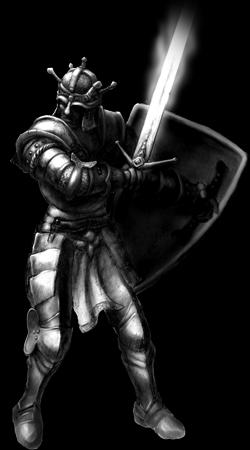
Chaos Scar third session – swallowed by frogs

We gathered at our place today for what is becoming a Monday holiday tradition – grilling and gaming!  Since we all had the day off for the Fourth of July holiday, just as we did a month ago for Memorial day, we decided to grill some burgers, ribs and veggies and play some D&D.  This was our third session in the Chaos Scar.  (Sessions number one and number two are at those links).

BullywugsOur party had just finished fighting bullywugs (frog people) on the first level of a ruined keep last time, and we began the day today by heading down a trap door into the next level.  Amazingly enough, our minotaur on a horse had no problem squeezing through the trap door.  🙂

We played through three battles today – some random bullywugs in a muddy chamber, some bullywugs and giant frogs in a big laboratory and some mud men in a vault.  The first battle was pretty good – nice and balanced – though my character ended up spending the entire battle stuck in the mud.   Fortunately, my Avenger, Kern, does have an at-will ranged attack, so I wasn’t TOTALLY useless!  Still, the mud that attacked at the beginning of my turn to immobilize me (save ends) was pretty annoying, but at least it only hit me and not the rest of the gang.

The third battle against the mud men was also easy, and we squeaked through the skill challenge that followed with success.  The real story of the day was the second encounter.  We fought three Giant Frogs (the link only works if you’re a DDI subscriber).  There were some other bad guys in the room, but this battle was all about the Giant Frogs.  These guys have an at-will power that lets them swallow a PC on a hit.  A swallowed PC is stunned (save ends).  That means that the character doesn’t get to do anything on their turn except take five damage (from the frog’s digestive acids, presumably) and make a saving throw.  If they fail the save, they don’t get to do anything next turn, either.

This was a miserable encounter for Nate, whose minotaur fighter was swallowed for pretty much the whole battle.  He didn’t get to take a single action until the battle was almost over (something like five rounds).  It was touch and go for the party (Nate and I both had our characters swallowed at least once), but Barbara used the healing abilities of her runepriest very wisely, which let us pull through.

This was a fun adventure on the whole, and we ended with enough experience points to move up to second level, which we’re all looking forward to.  Bree, our DM, did something I thought was really cool at the end of the session – she asked for our feedback on what was fun, what was not fun, and how to make the game more fun for us.  This leads naturally to some DM lessons.

  • The stun ability needs to be used very, very sparingly, if at all.  Certainly I wouldn’t recommend using a creature with an at-will ability that can stun (save ends).  If it’s once per encounter, okay.  If it can only stun for one turn and it is a recharge power, that’s probably all right.  But stun (save ends) at will is just too unfun for the players.
  • Similarly, monsters that daze or dominate should be used very sparingly as well.  Anything that keeps the players from doing stuff on their turns is not a lot of fun.
  • Adjusting the challenge level of encounters for a strong party is tricky.  Adding an extra monster with a stun (save ends) ability was not the way to do it in this case.  Consider increasing the damage dealt by the monsters and increasing their hit points.  MAYBE consider increasing their defenses, but don’t overdo it (having the PCs missing with all of their attacks is not fun either).
  • Flexibility is good, especially when the pre-packaged material just doesn’t work.  We faced a skill challenge that required Arcana and Nature as primary skills.  None of us are trained in either of those (except our Shaman, who was absent today).  Our DM rewarded creative uses of Athletics and Acrobatics on the fly, which made the challenge way more fun.
  • Think carefully before allowing a character a mount.  This hasn’t been a problem in our campaign so far, but we have one character with a mount, which seems really, really useful.  More speed, saving throws from being knocked prone, etc.  It’s all upside, and it seems to be pretty significant upside.  As a DM, I would make mounts an all or none proposition – either the players are all on foot, or they’re all on mounts.

Bree is doing a good job as a DM, and it’s clear that she really cares about getting better and making the game fun.  I think that’s the most important thing – a DM who is focused on fun for the whole party.  If you’ve got that, you’ve got a very important ingredient for a good game.

A nice little addendum – Bree ended up using some of my monster tokens for minions today.  They worked great!  I’m looking forward to using them in my LFR game (which Nate has said he wants to play in – cool!).

Advice I’ve received for my LFR session

For my last several posts, I’ve been talking about my decision to plunge into dungeon mastering a Living Forgotten Realms game at my friendly local game store, Enchanted Grounds.  That game will be three weeks from today.  I’ve already put the maps and minis together, so all that remains is for me to get comfortable with the adventure itself and then to run it well.

To that end, I’ve been seeking advice from other DMs, both here on my blog and over on EN World.  Here is the advice that I’ll be trying to keep in mind as I get ready to run my first adventure in public:

  • Be enthusiastic!  Enthusiasm from the DM means enthusiasm and fun for the players.
  • Make sure to really know the story of the adventure, not just the monster stats and skill challenge mechanics.
  • Get a feel for the personalities of the NPCs, especially in skill challenges.  Try to make them memorable and act as they would act.
  • At the table, set up a sheet that reminds me of who the PCs are:
    • Name
    • Class and race (optional, but it helps me for roleplaying)
    • Passive perception and insight
    • Defenses, including non-asset class defenses
    • Initiative modifiers
  • Have a flexible method of keeping track of initiative.  I’ve seen some DMs with little tags that they move around, or I’ve seen people using index cards.  I’ve also seen a dry-erase board, or ultimately D&D 4e Combat Manager (which I love, but not for this particular session).
  • When announcing whose turn it is, also announce who will be after that so that the next person can be thinking about what they plan to do.
  • Look for opportunities for bad guys to do cool or unexpected things – grabbing an item a PC drops, trying a stunt, etc.  This may encourage the players to think creatively, too!  Just make sure I’m ready to handle the rules for cool stuff.
  • Have the bad guys taunt the PCs or otherwise talk or yell or whatever during combat.  Make them characters, not just stat blocks with weapons.
  • When the battle is over except for a meaningless minion or two, just call it.  Don’t take the time to make the PCs hunt down that last little dude who can’t really hurt them.  Have him surrender, or just say that the PCs eventually finish him.

Naturally, these tips apply to dungeon mastering in general, not specifically for Living Forgotten Realms.  What other suggestions do you have in order for me to make this fun for myself and, more importantly, for my players?  Have I forgotten anything obvious?

LFR Maps – Finished products

Amazingly enough, I think I’m now ready for the Living Forgotten Realms game that I’ll be running in three weeks (WATE1-1 Heirloom), at least in terms of putting together the materials.  I blogged yesterday about the tokens I’ve created for the enemies and the day before about the maps that I drew in MapTool.

To bring things full circle, I thought I’d share the finished map files in all three forms:

I’m excited about the prospect of running this adventure now!  If our in-person game on Monday runs out of prepared material (unlikely, but you never know), maybe I’ll bust this out as an impromptu game.  More likely, I’ll ask if we can run it some future weekend before I run it for real.

Creating tokens for in-person gaming

Victory is mine!  In my last couple of posts, I’ve talked about the fact that I’m going to be serving as dungeon master for a real-life D&D game at my local game store, Enchanted Grounds, on July 24, 2010.  It will be a Living Forgotten Realms game.  I don’t own any minis (little statues to represent creatures), so I decided to make my own tokens (little flat representations of creatures) using the guidelines from Newbie DM’s blog.

After a little bit of trial and error, I succeeded terrifically.  The steps are as follows:

  • Find a good image for a token online, such as this one for a paladin: Paladin
  • Drag the token into PhotoShop
  • Resize the canvas in PhotoShop to be way bigger than the current image, and fill the additional background space to match the background that came with the image (I recommend using the eyedropper tool to get the right color and the paint bucket tool for the fill):Paladin2
  • Open up Token Tool and drag this new image from PhotoShop into Token Tool
  • Pick a nice border in Token Tool.  Also, go with 256 x 256 for the token size
  • Resize and re-center the image in Token Tool to look the way you want
  • Drag the image from the top right corner of Token Tool into PhotoShop:Paladin Token
  • From here, follow the instructions from NewbieDM to copy the token to a new letter-sized image (8.5″ x 11″), duplicating the token image, dragging a bloodied layer over it and making the bloodied layer semi-transparent (note that minions don’t get bloodied, so minion tokens don’t need a bloodied image – you can put one minion on one side of a token and another minion on the other side)
  • Rinse and repeat until you have a whole sheet of these tokens:Token Sheet

Play around with the size a little bit; I found that you actually want them to be a bit bigger than 1″ across, even though the ultimate size you’ll be punching out is 1″.  I like to have no border on my physical tokens – I like them to take up the whole 1″ circle if possible.  You’ll want to get a 1″ hole punch (I paid $10 for one at Michael’s – it’s pretty heavy duty) and a bunch of 1″ fender washers (I paid $8 for a box of 100 at the local hardware store) and a glue stick.  Below you can see my first pass at the paladin token (when I was aiming for 1″ exactly) and my second pass (when I went bigger) – the second looks way, way cooler.Paladin Tokens

The overall result was awesome, in my humble opinion.  I made tokens for the paladin I play in LFR games (Rhogar), the Avenger I’m playing in my in-person game (Kern), Barbara’s dragonborn Runepriest (Zaaria), and the enemies I’ll need for the LFR module.  These include a wererat, a gnome arcanist, some gnome skulks, some guard drakes, and a whole bunch of human bandits (generally minions).  On the back of the bandits I put goblins and kobolds (common minions, I think).

Tokens

I’m really happy with the way these turned out.  I now have all of the minis that I need for my LFR game, and the maps that I shared yesterday ended up working out great when I used PosteRazor to print them out (I’ve just printed them in black and white for now as a proof of concept, but I know they’ll be fine in color, too).  I’m feeling good about this!

I’ll make the individual token files that I created available on the Downloads page of my blog, too, so you can get them all one by one.

Living Forgotten Realms DM Preparation – Maps

As I mentioned in my last post, I’ll be a first-time DM for a Living Forgotten Realms (LFR) session at my local store on July 24, 2010.  I’ve gotten the adventure module (WATE1-1 Heirloom) and read through it once, which is a good start.  The things I haven’t been certain about are what to do about maps and what to do about tokens.  I’m pretty sure I’ll follow Ismael_DM’s suggestion in the comments of using the tutorial on Newbie DM’s blog to make flat tokens using metal washers.  More on that as I actually give it a shot.  (Thanks for the tip, Ismael_DM!)

As for maps, I’m pretty sure I’m going to stick with what I know: MapTool! While I’d love to set up a projector with my laptop to project a MapTool screen onto the tabletop (and there is a person at the local store who does exactly this), I’m not ready to lay out the cash required to build that sort of thing.

I’m pretty sure, though, that I can build my maps in MapTool and then print them out as “posters” to put on the table for my players to use.  DM Samuel has talked on his blog about doing this, building the maps in a program called GridMapper (which I probably would have loved a few weeks ago before I learned how to really use MapTool) and then printing them out to scale using a program called PosteRazor.  I haven’t tried the printing part yet, but I figured I’d start by building the maps in MapTool.  Printing can come later.

There are three combat encounters in the module I’ll be running (no real spoilers here).  There’s a battle outside of a random inn on a random street, a battle inside a shop and the room beneath it, and a battle that can take place either in a room in an inn, next to a stable, or on the city streets depending on what has happened earlier in the adventure.

The adventure describes how to build each encounter area using Dungeon Tiles.  Now, I don’t have any Dungeon Tiles myself, but Wizards of the Coast has a program called Dungeon Tiles Mapper that you can download for free and which contains images for a bunch of different tiles (not all of them, but a good variety).  Combining that with the big MapTool image download that I have, I was able to recreate the maps pretty well (in my humble opinion).  In some cases I tried to be as faithful as possible to the original, but there were some cases where I decided to make my own improvements.

First, I created a map that serves as both the inn exterior for the first battle as well as for the last battle (the downstairs part of the inn).  I used a texture to paint the cobblestone streets, a Dungeon Tile image for the inn itself, a stairs object from the big MapTool download and a roof object from that same download to represent the building next door.Inn Exterior

Next, I created the main room of the shop from the second encounter.  This was dead simple – one Dungeon Tile image.

Shop Interior

After that, I created the hideout beneath the shop.  This one was much more involved.  I used some Dungeon Tiles for the spiral staircase, the blue rune, the wooden stairs and the trap door.  I used some flooring from the Dungeon Tiles to paint the stone floor as well as the wooden platform floor.  I used images from the MapTool download for everything else (tables, bookshelves, chair, chest).  I think it turned out really nicely.

Hideout

Next up was the room in the inn.  Nothing here was from Dungeon Tiles.  The stairs, beds and windows were from the MapTool download and the floors and walls were painted using various wood textures from that download.

Inn Room

Finally, the exterior of the stable.  It’s a lot like the inn exterior with the streets and the roof.  The horse and cart came from the big MapTool download.

Stable Exterior

My next task will be to try to print these out using the correct scale in PosteRazor.  Wish me luck!  And as always, I’d love to hear your feedback, whether about the maps themselves or about the general idea of printing these out to use at the table (probably on card stock).

Living Forgotten Realms – Becoming a DM

I’ve officially taken a new step in my dungeon mastering today: I’ve decided to become a DM for at least one Living Forgotten Realms game (LFR).  I’ve played in three LFR games so far at my local store, Enchanted Grounds, and I’ve had a good time.  But I know that I really like being a DM, too, and when the person who organizes LFR games at the store sent out a message saying that he still needed DMs for several games and one of them was for a module that I’ve already been through as a player, I took it as a sign.

I sent a message to Rich, the organizer, letting him know that I was interested and asking what I needed to do if I wanted to be a DM for LFR.  He said that the main requirement was willingness, but that I also needed to become certified as a DM for organized play with Wizards of the Coast in the Role Playing Games Association (RPGA).  This meant that I had to go to the RPGA web site and take (and pass!) a test.  The test was a 20-question open book test, and I’m proud to say that I passed – but a little ashamed to say that I just barely passed.  I needed to get 16 out of 20 questions right, and that’s exactly what I got.  From the questions that I missed, I learned the following useful facts:

  • When a character or monster takes the coup de grace action to attack a helpless opponent, they still have to hit with an attack roll (bearing in mind that the target is granting combat advantage).  IF they hit, it’s an automatic crit, but if they miss, they miss.  I thought it was an auto-hit.  Hmm, maybe Zod shouldn’t be dead after all…
  • If you have total concealment against a creature (you’re invisible or for some reason the creature just can’t see you) then that creature can’t take an opportunity attack on you if you move away.  Logical, but I missed it.
  • If you’re dazed, you’re not allowed to delay your turn.  Go figure.

Anyway, I did pass the test, and Rich has sent me the module that I will be running: WATE1-1 Heirloom.  In the language of LFR modules as I understand it, this means that the module is set in Waterdeep (WATE), that it’s for low-level characters (the first 1) and that it’s the first in a series of Waterdeep modules for low-level characters (the second 1). I’ll be running it on July 24, 2010, which gives me a little less than a month to prepare.  That should be plenty of time.

WATE1-1One potential problem that I discovered is that I’m used to being an online dungeon master (hey, that’s the name of this blog!), which means that I don’t necessarily have the supplies I need to be an in-person dungeon master.  I do have a battle map, which is good, but I only have one.  When I’ve played in events at the store in the past, the DMs usually have multiple battle maps with the encounter areas already drawn on them (to save time).

The real problem is that I don’t own any minis.  None.  As the DM for the game, I’m responsible for providing minis for all of the monsters.  In looking through the encounter, I need a bunch of minis with a lot of variety.  I’m fine with using some kind of tokens (colored glass beads, for instance) for the minions, but actual creatures probably require actual minis.  I might be able to borrow some from Nate and Bree, but that’s not ideal.

What are your suggestions for acquiring or improvising minis?  How should I go about buying them, if I go that route?  I have no interest in painting minis, just to be clear.  Should I make my own out of Play-Doh or something?  I read another DM’s blog who talked about doing this and letting the players squish the bad guys when they killed them, which sounds like fun.

One option is to stick with what I know – MapTool!  There are sites out there that talk about setting up a projector with your laptop and using that to project the battle map and the monsters onto the table electronically. I’ve seen this sort of thing in action once, and it was way cool.  It’s expensive, though, and I’m not ready to sink that kind of money into a setup unless I know I’ll get a lot of use out of it.

I’m looking for suggestions!  What should I do about minis?

Chaos scar campaign – Fighting mushrooms, lunatics and frogs

Our in-person D&D group gathered yesterday for our second session in the Chaos Scar (first session at this link).  I did indeed tweak Kern the Avenger a little bit so that he gave up some Dexterity for Constitution (a few more HP and surges seemed like a good idea), though I made it so the change wouldn’t go into effect until after the next extended rest.  Otherwise, it would have been too hard to figure out where my hit points should have been (okay, so I have one more surge now, and each of the eight surges I already used should have give me one more HP, but wait, I have AC that’s one lower now, so I probably would have taken some more hits…).

We also added a new player, Blaine, to the group with this session.  This brings us to five party members:

  • Kern, the githzerai Avenger played by me (Michael) – a striker
  • Zaaria, the dragonborn Runepriest played by my wife Barbara – a leader
  • Keira, the human Monk played by Kyle – another striker
  • Bullwark, the minotaur Fighter played by Nate – a defender
  • Iskander, the wilden Shaman played by Blaine – another leader

We’re doubled up on leaders and strikers and we’re without a controller.  That should be fine.  It’s worth noting that Barbara’s Runepriest is definitely a bit of a defender, not just a pure leader.  Also, Blaine’s shaman is at least trained in Arcana, which means we finally have someone who can identify magic items!  We’re not a smart party – Iskander’s intelligence of 13 leads the party, with Kern’s intelligence of 8 bringing up the rear.  Wise, yes; intelligent, no.

Yesterday’s session started off with a battle against some mushroom people who kept denying our PCs standard actions on their next turns – a real pain in the butt.  Since Kern was so low on HP, I had him stand in the back and shoot Radiant Vengeance for the whole battle until the very last round, where I used my encounter power to shift into melee and finish off the last bad buy with my fullblade.

We then got to do some nice roleplaying.  We had rescued a halfling slave from the temple of Torog in the previous session, so we decided to take care of him.  Bree (our DM) had to make up a name on the spot and decided to call him George.  With a few minutes to prepare later, she determined that George had been captured along with his sister and two brothers, who didn’t survive.  He was from a nearby town, so we returned him to his father.  Maybe that will be useful in the future!

Our next adventure hook was to help a goliath sorceror recover a staff of earthen might that one of his ancestors had created in a keep.  The keep had been ruined and the staff broken when the meteor came to the Chaos Scar.  The sorceror seemed to be on the up-and-up, so we took the job for the promise of the other treasure in the ruins of the keep.

On the way to the keep, we heard a horse whinny and some people shouting.  We found a horse and cart, with the cart sinking into a hole.  There was a lunatic on top of the cart who seemed to think this was our fault, and he ordered his minions to kill us.  The battle was interesting, as some giant ants came out from under the cart (apparently the hole was the ants’ home) and attacked the minions as much as they attacked us.

Finally, we made it to the keep, where we faced off against some bullywugs – frog people.  The setting was interesting (difficult terrain and the like), but the battle again was pretty easy.  We found the trap door that leads down to the next level but haven’t gone there yet.

We had a fun session, and I’ll admit that I was pretty focused on playing and thus didn’t pay attention to a lot of DM lessons.  Here’s what I picked up:

  • I’ve heard it said before, but having a list of names on hand is a good idea – you never know when your players are going to want to get to know a throw-away NPC a little better.
  • Monsters who take away the ability of PCs to do fun stuff (stunning, dazing, taking away standard actions) should be used sparingly, and it should be a big deal when they show up.
  • Asking players for wish lists of magic items they’d like to have is a good way to make sure the items they find are useful.  From the player side, though, I’m not sure how I feel about it yet.
  • Thinking of fun in-story tie-ins on the fly is not easy, but it’s rewarding for the players (such as the story of George the halfling).  Be flexible and creative as a DM, and you’ll be rewarded for it.

My online game is on hiatus at the moment as Lane, who is a newly-minted accountant, has to spend most of her free time studying for the CPA exams.  Good thing I have in-person D&D to keep myself occupied!

Living Forgotten Realms – third time’s a charm

Last night I returned to Enchanted Grounds (my friendly local game store) for a third session of Living Forgotten Realms (LFR).  This was the first session I’ve played with my half-elf Paladin, Rhogar, at second level.  Before heading off to the store to play, I leveled Rhogar up in the Character Builder.  Going to second level meant that I got to choose a utility power and a feat.  For my feat I took Versatile Expertise – Heavy Blades (he wields a longsword) and Holy Symbols (since he could use one of those, potentially).  In the process I discovered a bug in the Character Builder.  Apparently if you are a half-elf, your dilettante power (in my case a Cleric power) doesn’t appropriately include the holy symbol, whether for expertise or for a magic holy symbol.  I tried equipping it in every available place, and it made no difference.  Oh well, so I have to manually modify one power card.  I’ll live.

The adventure last night was actually kind of dull.  The party makeup was two dwarven Clerics, two Fighters and my Paladin (who has a healing bent).  So no strikers and no controllers.  Hm.  Fortunately the Fighters were built for dishing out damage.

Our party was hired by an innkeeper (I’m noticing a pattern here…) to escort him to the home of a minor noble to return a ring that had been found in a fish that the innkeeper had served to a customer.  We ran into a cart driver being ambushed by a gang of halflings, an elf and a gnome, so we helped the driver out.  It was a little annoying to try to chase down so many halfling minions without a controller – some of them got away with the cart driver’s goods, so we didn’t get a real reward from him.

The minor noble was happy to get his ring and told us that it had belonged to his parents who had died in a shipwreck.  Their bodies had washed ashore but the ring hadn’t.  He wanted to speak with his parents’ ghosts, but he needed some wood from the wrecked ship.  Off to the wharves we went to hire a boat to take us out to the wreck.  Getting the wood was easy, and we returned to the noble to escort him to the graveyard for the ritual.

On the way to the graveyard our party was attacked – and I never did get the story reason for the attack, frankly.  The battle was interesting in that it involved a tiefling spellcaster who teleported all over the place, two dwarves in heavy armor, a human brute of some sort and a bunch of elven archers on the surrounding roofs.  My Paladin spent pretty much the whole battle trading shots at one of the dwarves, who apparently had an armor class of 25!  Man, was he hard to hit.  We eventually killed off the rest of the bad guys, and it was assumed that we would eventually finish off the dwarf.

With that, the noble performed his ritual and we were done.  I’m not quite sure why, but I just found this session to be pretty unsatisfying.  My character did get to do some interesting things in combat, and a little bit of role playing too, but it just didn’t “pop” for me.  The DM was only so-so.  Maybe the fact that we had only defenders and leaders in the party was a drag.  Maybe I just wasn’t in top D&D form.

I did get a better understanding of some of the LFR rules.  First, I learned that gold that people give you along the way (“The noble offers you 30 gp if you will escort him to the graveyard…”) is irrelevant.  At the end of the session you get 100 gp, period. (I assume this would be higher for higher-level adventures, of course.)  If you decide to take one of the magic items that were found during the session, fine, but you can only accumulate one per level (I currently have my two already).  If you don’t take a magic item, you can have an extra 75 gp.  Also, you can only use magic items of up to your level +4, so the two seventh-level items Rhogar has must stay in his backpack until he gets to level 3.

This does bring up a question: Since Rhogar has over 360 gp now, he could buy a first-level magic item, such as +1 Magic Plate Mail Armor.  Alternatively, if he waits a session he’ll have enough money to buy a second-level magic item.  I’m leaning toward waiting – what do you think?  Should I keep saving up indefinitely and finally splurge on a high-level item someday?

MapTool campaign frameworks

After I had done a lot of work to start building macros for my D&D game that I’m running in MapTool, I discovered something – it’s not necessary to reinvent the wheel if you don’t want to.  It turns out that a number of people on the MapTool forums have created what are known as campaign frameworks.

A campaign framework is a work of art.  It’s a MapTool campaign file that contains within it everything you need to run a campaign under a given rule set (D&D Fourth Edition, d20 System, as well as other RPGs).  The particular framework I’ve played around with is from a MapTool forum user called Rumble.  His framework for D&D 4th Edition is in this post.

The framework is basically a campaign template.  If you want to start a new campaign, you start with the template file.  When you open the file, you’ll see something like this:

Rumble FrameworkWhat you see here is several pre-made tokens on the top part of the screen, some campaign macros (including those that will let you import character or monster info), and some macros for the sample PC token that’s selected.  The campaign file has an extensive set of properties to keep track of the sort of things my properties do and then some.  For instance, I hadn’t thought of keeping track of action points or experience points in the character sheet, but this property set does it.

Furthermore, the macros that are built in for both PC and monster tokens are all-encompassing and way cool.  They include everything I’ve done (hit point management, attack powers, skills) as well a bunch of things I haven’t done (delaying one’s turn, pulling up a formatted character sheet and power cards).  There are even macros to make editing the character stats easier, rather than having to directly fiddle around with properties.  The attack macros take into account who the target is, figure out their defenses, establish whether the attack hits or not, and so on.  It’s very, very detailed, and from what I understand it all works!

So, I learned that I don’t have to write all of these macros from scratch – others have done it for me.  Macro-writing over, right?

Nope.

See, I LIKE writing macros!  I’m not a professional programmer, but I’m pretty good at programming.  When it’s for a hobby, it’s something I just enjoy doing.  Plus, I like the idea of being able to customize my macros for my players.

Now, I would be foolish if I completely ignored the existence of excellent MapTool frameworks like Rumble’s.  If I’m having trouble with my own macros, I can see how Rumble implemented something.  I’ll certainly take inspiration from some of his ideas (such as tracking XP and action points).  But I don’t feel like using a pre-packaged setup like this because then I would deprive myself of the fun of discovering how to write my own MapTool macros.

All that said, if you’re not into the idea of writing your own macros for the pleasure of writing them and you just want a bunch of macros that work for your D&D 4e game, start your campaign from a template like this one.  There are lots of others on the MapTool forum for a variety of games, and they look fantastic to me.  I love the MapTool community!

Chaos Scar campaign begins

At long last, my in-person D&D group has begun its second campaign.  Last time Nate served as our DM and we began with an adventure from the Dungeon Delve book that Nate adapted to his own setting and that went into home brew territory fairly quickly.  We ended up stopping that campaign after a few months when my wizard died and the rest of the party wasn’t feeling all that enthusiastic about their characters (except for Bree, who was fine with her character but was itching to try her hand as dungeon master).

With that campaign three weeks behind us, we entered the world of the Chaos Scar, which I believe is an adventure from Dungeon magazine.  The Chaos Scar is an area where a meteor had fallen and shards of the meteor were sending out evil energy that corrupted the land and creatures around them.  Bree was great about asking us to think about how our characters might fit into this world, how they got involved with the Chaos Scar, and how they’re connected to one another.  I love that.  Even better, when we got to the table she presented us each with an honest-to-goodness hand-made map on vellum paper!

Chaos Scar Map

How cool is that?  It’s probably worth mentioning here that Bree is studying to be a professional artist.  She knows what she’s doing.

Anyway, our party trekked into a cave in the Scar to try to wipe out a cult of Torog.  The first battle involved us fighting some constructs who could use ranged at-will attacks to daze us – ouch!  We took some licks but prevailed.  The second battle involved a rope bridge across a chasm with archers on the far side and some semi-sentient mushrooms below.  The two dextrous characters (my Avenger and Kyle’s Monk) crossed the bridge while the less-dextrous characters (Barbara’s Runepriest and Nate’s Fighter) crossed the chasm below.  We prevailed there, too, but I took a lot of damage and used up all of my surges.  The final encounter of the day saw us fighting the cultists and their leader in their little temple, during which time I mainly stayed out of the way and shot my ranged at-will attack that gave me temporary hit points.  Even with that, the cult leader hit me with a ranged attack that erased my temps and dropped me from 18 to 8 (remember, no surges).  Yikes.  We finished that battle and searched the cult leader’s chamber and ended the session.  We thought we were about to take an extended rest, but Bree informed us that the mushrooms were arising now that the cult leader was dead.  This could get ugly for my Avenger!

I don’t have a lot of DM lessons to share today, except to say that Bree is clearly going to be a lot of fun as a DM!  I did take away some player lessons, though I haven’t figured them all out just yet.  At the very least, I’m certain that having my Avenger just rush headlong into melee is not the way to go, despite the fact that he really wants to fight in melee in order to use his Oath of Enmity.  I have to let the tank characters get there first, I think, which is tough when I’m so mobile.  I’ll probably lower my Dexterity a little in order to pick up more Constitution.  That will lead to slightly lower armor class but higher hit points, more surges, and a greater surge value.  Good tradeoff?  I’d like to hear your opinions and suggestions in the comments about making a more effective Avenger.