Heroes of Shadow – My Thoughts

I picked up a copy of Heroes of Shadow several weeks ago but only now got around to reading the thing. The content has been pretty thoroughly reviewed by others already, so I’ll try to be brief in sharing my thoughts.

Essentials or no?

First – is this an “Essentials” book? Well, that’s a meaningless distinction to me as I’m fine with PHBs and Heroes of… books at the table. But I understand where the anti-Essentials folks are coming from in referring to Heroes of Shadow as an Essentials book, because it never really acknowledges the existence of the Player’s Handbook options. The races and classes that are referred to in this book all appear either directly in Heroes of Shadow or in Heroes of the Fallen Lands or Heroes of the Forgotten Kingdoms. There’s no mention of goliaths, wildens, psions, shamans, etc.

That’s not to say there’s nothing that those races and classes can use in this book; the feats are open to them, as are the equipment options, epic destinies and many of the paragon paths. It’s clear, though, that Wizards of the Coast’s new books are designed to be friendly to players who aren’t familiar with the Player’s Handbook options and only know the Heroes of… books. This doesn’t bother me in the slightest, but I know it irks some people.

Fluff

The first chapter of Heroes of Shadow is fluff about the Shadowfell itself, the ways that characters might tap into shadow power, and the Raven Queen. Good stuff for role-playing and rounding out a character’s background. There’s also a lot of shadowy fluff spread throughout the book in all of the race and class descriptions, and even accompanying the various powers, paragon paths and equipment.

Classes

The classes introduced in Heroes of Shadow are the Executioner Assassin, the Blackguard Paladin, the Vampire (interestingly, no subclass name here) and the Binder Warlock. There are also new powers and the death domain for the cleric, new powers and the Gloom Pact for the Warlock (Gloom Pact is for the Hexblade Warlock only), new powers for the Wizard, and new schools (Necromancy and Nethermancy) for the Mage Wizard.

I won’t opine on the power level of any of these options, as I haven’t played with them yet. My main problem with them is that I just don’t dig the flavor of shadow… which means that I probably shouldn’t have purchased this book! I prefer my characters to be more straightforward heroic rather than dark, tormented anti-heroes or anything like that.

Of the classes presented, I think the Executioner Assassin seems kind of cool and the Blackguard Paladin doesn’t seem at all Paladin-like (he’s a striker rather than a defender). The Vampire is a class that offers no choices – your powers are pre-selected when you pick the class. It doesn’t appeal to me at all. The Binder Warlock seems fine, and if you’re already comfortable playing a Warlock I don’t see any reason that you wouldn’t enjoy this controller version (my wife just started playing one of these). The Cleric and Wizard options let you create a shadowy version of the basic classes, if that’s your thing. Some of the power options might be really strong, but again, that’s not really what I’m looking at.

Races

The races presented are the Revenant, the Shade and the Vryloka (basically a vampire). The Revenant is apparently unchanged from the version that was previously released on DDI (I never used that race, so it was still new to me). The Shade is a human that has embraced the shadows. The Vryloka is, well, a vampire. Meh all around.

Interestingly, there are several pages at the end of the race section devoted to Dwarves, Eladrin, Elves, Halflings and Humans who are “shadowy.” I was a little surprised not to see Tieflings here. It’s pure fluff, of course – examples of certain members of these races who have some connection to the Shadowfell.

Paragon Paths, Epic Destinies, Feats and Equipment

This is the chapter that cemented in my mind that I’m not the target audience for this book. I read through the paragon paths and found a couple of them to be pretty interesting. I have a 10th level Paladin for Living Forgotten Realms games who will soon be entering the paragon tier (my first paragon character), and I considered whether I’d want to take any of these paths. A couple of them had some interesting mechanics and flavor that was almost appealing… but then I saw something like a power that deals cold and necrotic damage. My good-aligned Paladin is not going to want to deal necrotic damage. If this were a home game I could re-fluff it, but not for LFR. And then I realized that if I’m thinking about re-fluffing a Heroes of Shadow paragon path, I’m doing it wrong. These options are for players who want to be shadowy. That’s not me.

One little bonus I’ll mention here is that the Ravenkin paragon path provides the character with a raven familiar. The interesting part is that this page includes the rules for familiars, which were previously only available in Arcane Power (they’re not in the DDI Compendium, frustratingly). So, if you’re a DDI user who’s been annoyed at not having the familiar rules at hand, you might have another reason to get Heroes of Shadow.

Overall

There’s a certain audience who will probably really enjoy Heroes of Shadow. Players who want to run dark characters with shadowy backgrounds now have a ton of options at their disposal. Those types of characters don’t feel especially heroic to me (I have trouble with PHB1 Warlocks, frankly), but that’s not an indictment of the book – it just means that I’m not the target audience. If you want a character who’s brooding and mysterious or perhaps flirting with evil, then you’ll enjoy the options in this book.

Me – I wish I’d passed. Oh well.

Reavers of Harkenwold Maps

Edit: This post was updated on 5/14/2011 to change the maps to a 50 pixel per inch scale and to provide gridless versions of the maps (which, frankly, are the better choice for dragging into MapTool or Fantasy Grounds or whatever you use). Also, if you want the full MapTool file for this adventure, go here.

I ran the Reavers of Harkenwold adventure from the Dungeon Master’s Kit using MapTool over the past few months and had a great time with it. In the process, I needed to create MapTool versions of these maps, and I thought that others who are running the adventure using online tools might be able to make use of them. Enjoy!

Each map can be clicked for a larger version, and the printable PDF links for each map will bring you to a version that is formatted in printable one-inch square scale

Main overland map (printable PDF)

Road with wagon (printable PDF)

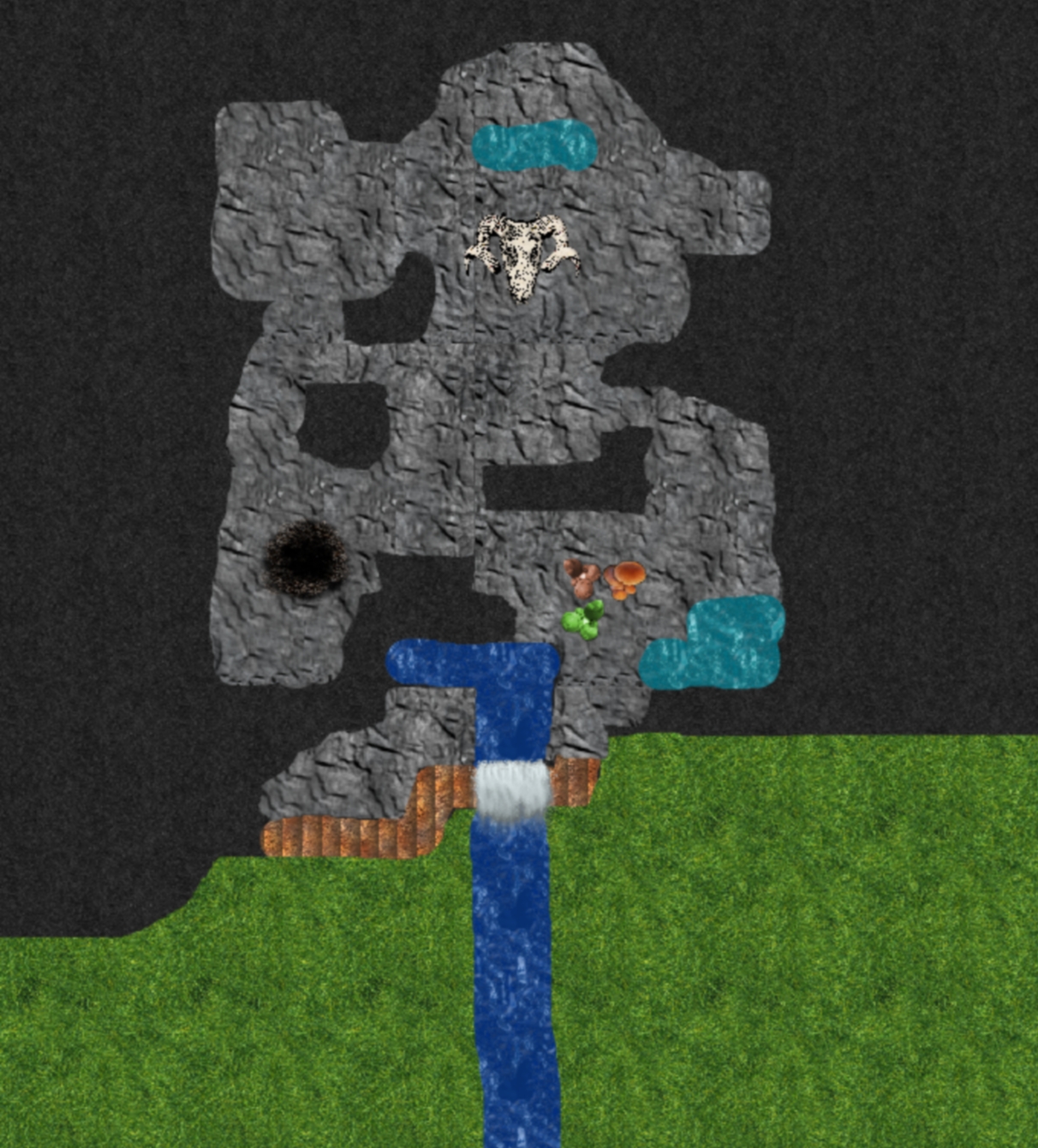
Toadwallow Caverns (printable PDF)


Ring of Stones (printable PDF)

Underground Lab (printable PDF)


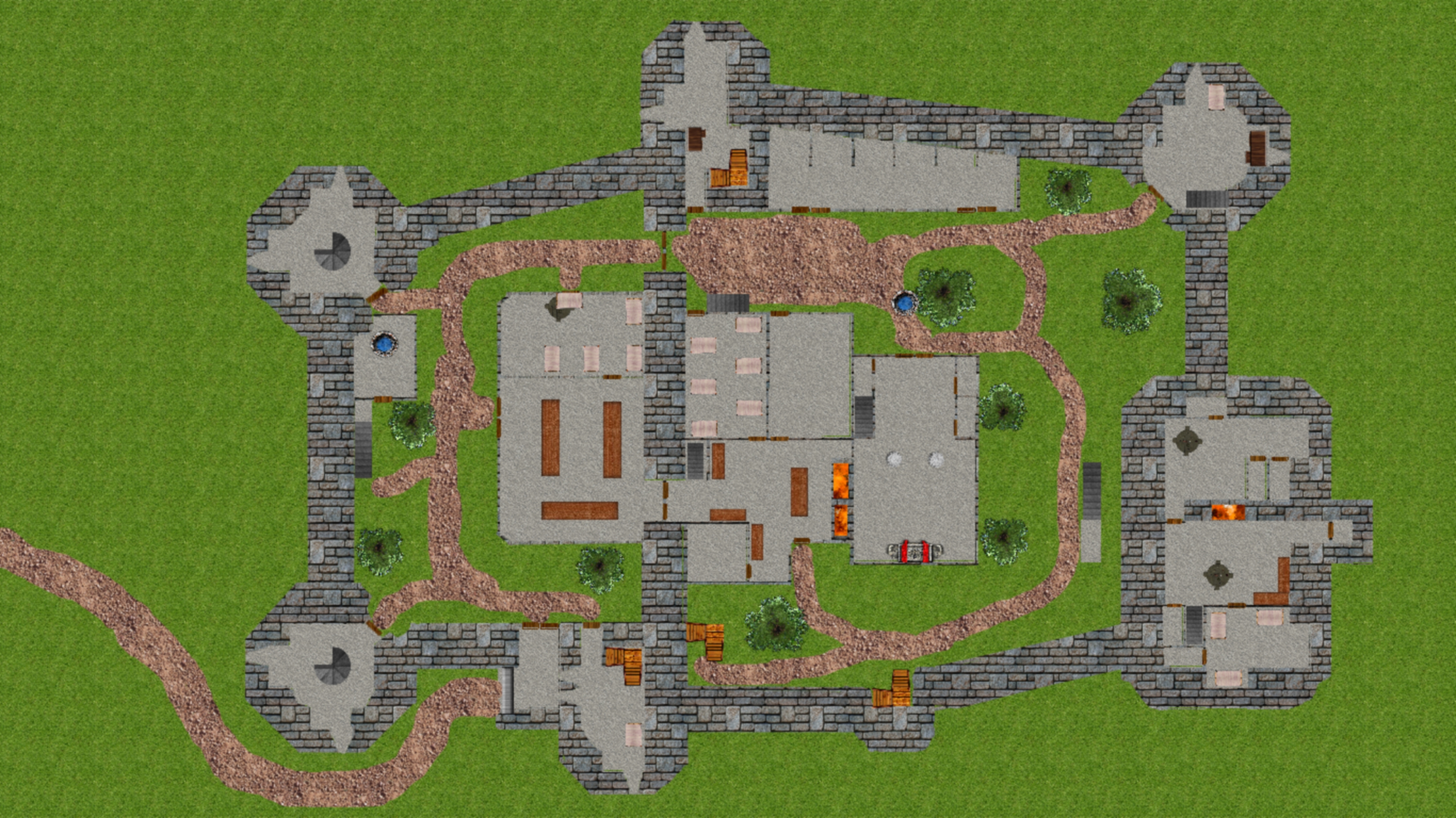
Iron Keep main level (printable PDF)


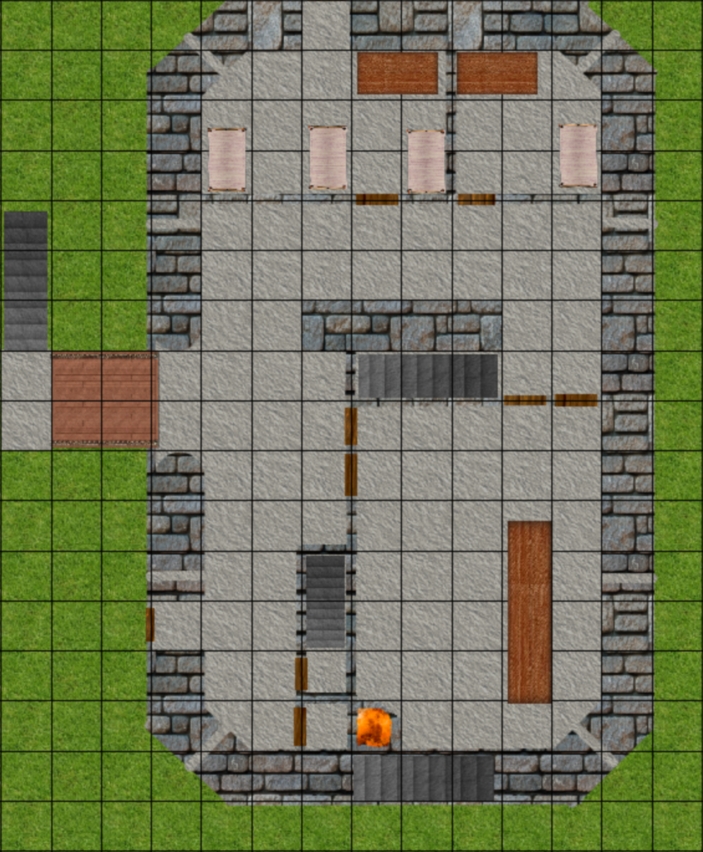
Iron Keep second and third floors (printable PDF)

Third Floor

Review: Reavers of Harkenwold

Last week, I finished running my family campaign (my wife, her brother, and his wife) through the adventure from the Dungeon Master’s Kit, Reavers of Harkenwold.

I should start with a big, public “thank you” to Jeff, the owner of my friendly local game store, Enchanted Grounds, for loaning me the adventure from the store copy of the DM Kit, gratis. I had no need for the DM Kit book (I already have the Dungeon Master Guides 1 and 2) nor the tokens (I use my MapTool / projector setup for gaming), so I just couldn’t justify spending the money on the entire DM Kit just for the adventure. Jeff loaned it to me on the spot. Great guy, great store!

The Reavers of Harkenwold adventure is, in a word, excellent. It is presented in two separate magazine-type books. The first begins with a thorough overview of the plot of the adventure in both a super-brief format (here are the three or four major points of the plot) as well as a longer format for book 1 that goes over the flow of that section. It continues with some possible adventure hooks, detailed descriptions of the locations the PCs might visit in the adventure (complete with names of shops in towns and so on), and then descriptions of the non-player characters that the party might meet (including their motivations and role-playing tips for the most important NPCs). It then moves into the various encounters that the PCs may meet. Book 2 starts with the plot overview for that book, and then the encounters.

SPOILERS AHEAD. If you plan to play this adventure as a PC and you want to be surprised, I suggest you stop reading now.

The plot is straightforward, in a good way: Free a region of innocents from an evil outside army that has taken over. The players need to gather allies, fight in a large military battle, then infiltrate a keep. Book 1 contains the background material and the allies-gathering, while book 2 has the big battle and the keep.

I ran the game using MapTool online for a party of three PCs. My players were a level above the recommended range for the adventure, so I mostly left the numbers alone (higher-level PCs, but fewer of them than recommended), and it worked out okay. The only encounter that was TOO brutal, in my opinion, was Encounter D4: Yisarn’s Lair from the end of the first book. I removed the traps and one of the monsters from that battle and it was STILL too hard (the players retreated and came back the next day with an elf ally).

There is plenty of information in Reavers of Harkenwold for a party that loves role-playing to really get into the world and its people and their problems. However, that is not the kind of group that I have. My PCs prefer to get into fights and kill bad guys, and this adventure worked just fine for them, too. The order that they ran into the encounters was:

  • E1: Ilyana’s Plight
  • A little role-playing with Reithann, leading to Tor’s Hold
  • T1-T2-T3: The bullywug caverns
  • A little role-playing at Tor’s Hold, then on to the D1 to meet the Woodsinger Elves
  • D2-D3-D4: Liberating the underground lair for the elves
  • D4 again: The party retreated the first time and got a Woodsinger Elf to help them the second time (I made up a simple companion character)
  • E4: Hunted! on the way to Albridge
  • A little role-playing, leading into B1: Battle Plans
  • B2-B3-B4: The Battle of Albridge (Nazin fled when his minions dropped, and just barely got away, even with his action point)
  • Some role-playing to visit Old Kellar in Harken to learn about the Keep, then back to Albridge to talk to Dar Gremath about plans, then back to Harken for the infiltration
  • K1: Infiltrating the Keep. The PCs decided to pretend that one of the PCs was the sister of a Harkenwolder who had joined the Iron Circle and died in the Battle of Albridge, and she had been sent to collect his personal effects from his barracks. I ran this as the “Iron  Circle Poseurs” version of the challenge, more or less, and they succeeded (barely).
  • The party was escorted to the barracks in room 6, where they killed their escorts, went into the empty banquet hall (room 5) and then into the kitchen (room 15) where the servants tried to help.
  • K5: The Great Tower entrance
  • K7: Lord’s Chambers
  • K6: Gaol (after Nazin had already been defeated; the PCs produced Nazin’s head and I had the Mage therefore flee

So, I never ran E2, E3, K2, K3 or K4, and that was absolutely fine. It was refreshing to me that the adventure had more encounters than were required – it made me feel okay about not using all of them.

My players had a good time with the adventure, although they’re rather easy to please – let them kick some butt, and they’re happy. I think a party that likes more plot and role-playing and opportunities for creativity could also get a lot out of this adventure. The back story and information about all of the people and places is really well presented, and I think DMs can find a lot to make use of.

D&D Essentials: The sky has not fallen

I originally reviewed the first D&D 4th Edition Essentials book, Heroes of the Fallen Lands, shortly after it was released in September 2010. I’ve gone back to re-read my review, and I still completely agree with everything I wrote back then.

In a nutshell, the Essentials books presented some new build options and new feats and generally felt to me to be pretty much like any expansion books that Wizards of the Coast had published for D&D4e (Martial Power, Arcane Power, Player’s Handbook 2, etc.). Good new options; maybe not every player would use every option, but some would probably come in handy.

Lots of people in the online D&D4e community were worried about the Essentials books – was this a new half-edition? But I think most of that concern dissipated in the end.

Thus, I was surprised when I read Neuroglyph Games’s review of the new Heroes of Shadow book over on EN World (plus the somewhat different version on their blog) and the follow up conversation on the Neuroglyph Games blog. The review of the material was fine and useful (I just got the book today, in part because of the positive review), but the author made it clear that he saw this as an “Essentials” book and was therefore seriously considering excluding it from his no-Essentials campaign (which he referred to as “Traditional 4e” or “Core 4e”). From the poll on his review, he’s not alone – there are apparently a significant number of DMs who run “no Essentials 4e” games.

This baffles the heck out of me. I could understand excluding a book from my table if I feel that it’s inappropriate for the game I’m running, perhaps. Heroes of Shadow, for instance, is probably not going to come into play very much in the games I run because it seems to be aimed more at “dark” campaigns where PCs may be flirting with evil alignments, and that’s not the kind of game I tend to enjoy. That said, I would still allow material from the book if a player asked and it seemed to fit within the campaign.

My approach to DMing is to let the players make the choices they like, but to retain veto power. If a player picks a race that doesn’t fit in my world, I’ll let them know that and ask them to pick something else. If they pick a power that I feel is overpowered relative to the rest of the table, I’ll ask them to pick something different. If they make choices that just don’t make any sense with the rest of their character concept, I’ll ask them to change those choices.

It’s very rare that I ever exercise this veto power, and I’m always very nice about it, trying to work with the player to help them find something that both works within the game I’m running but also makes them happy.

All of this is a roundabout way of saying that I personally feel that excluding books entirely is a pretty silly way to run a game, unless every single thing in the book is completely out of line with a particular campaign. I have a hard time imagining that the Heroes of the Fallen Lands and Heroes of the Forgotten Kingdoms books would be completely out of line with very many D&D 4e campaigns, and I gather that the DMs who exclude them are doing so out of protest against WotC business practices, specifically a feeling that WotC has tried to sneak a half-edition by us without being forthcoming about what it really is.

I think it’s fair to disagree with WotC business practices or misleading statements and to not support the company because of it. But these DMs seem to want it both ways – they want to protest WotC’s behavior but still purchase WotC releases that are “non-Essentials.” I just don’t get it.

If a DM wants to run a non-Essentials game, they can absolutely have a lovely time running a game using all of the material that was published before September 2010 – there was a ton of great stuff already published at that point. Everything published since then will have been written with the existence of the Essentials books in mind, just as material written in the summer of 2010 was written with the existence of Martial Power 2 and Player’s Handbook 3 in mind. To expect WotC to publish books that ignore the existence of Heroes of the Fallen Lands and Heroes of the Forgotten Kingdoms is silly, in my opinion. Why would they do that?

Essentials is not D&D 4.5. It’s a bunch of new options, some of which you might love and some of which you might think are a waste of time. I honestly don’t understand why there is so much emotion around this topic. I’m not a DM who feels that the Heroes of… books are the greatest things written for D&D 4e or anything like that – they’re simply fine options, much like PHB2 and PHB3. I don’t see anything disturbing or objectionable about them that would lead me to consider banning those books and everything published in their style from my games. And I truly don’t understand DMs who feel strong, negative emotions about these books.

I wasn’t around for the 3.0 to 3.5 Edition Wars, nor the 3.5 to 4.0 Edition Wars. Maybe I just don’t get it. I’m pretty sure that I don’t want to get it!

MapTool – updated and new macros

I’ve spent a little time bringing the macros on my web site up to date with the latest versions that I’m using in my own games. You can see all of my macro code here.

A few changes of note:

  • Healing macro for PCs now handles healing surges and non-surge healing in one macro
  • Properties have been updated so that daily power tracking works properly (fun fact; having a property called D4 instead of Daily4 creates problems in a program that recognizes D4 as a four-sided die)
  • Added code to allow for encounter, X-times-per-encounter (such as Healing Word) and daily power tracking
  • Added macros for toggling states such as Dazed, Marked, etc.
  • Added short rest, extended rest, death saving throw and second wind macros
  • Revamped monster properties so that the items that need to be set manually are all grouped together (this makes for faster monster token creation)

I also realized that my list of macros on that page was getting insanely long, so I created an index at the top of the page that will let you jump directly to whatever macro you’re looking for. For convenience’s sake, I’ve reproduced that list below.

If there are any MapTool macros that you’re looking for but that you don’t see here, please let me know – I’m always looking for excuses to write new macros!

Links to individual macros:

Auras in MapTool

When using MapTool to run Dungeons and Dragons 4th Edition games, it’s useful to be able to show the players that a monster has an aura and which squares are and are not in that aura. Yes, MapTool can handle that!

The trick is to use lighting. I’ll admit that I don’t take advantage of the powerful lighting and vision blocking layer capabilities of MapTool; I just reveal the map as the party moves through an area by removing the fog of war manually. However, I don’t completely ignore lighting any more, now that I’ve discovered its uses in creating visible, color-coded auras for monsters (or PCs, but that’s rarer in my games).

To set up auras, go to Edit – Campaign Properties, and then navigate to the Light tab. Unless you plan to use the default light sources in your game, such as the candle or the torch, you can delete everything that’s here and replace it with auras.

I’ve set up three categories of auras – red, green and blue. To set up a category that will appear on the Light Source menu that pops up when you right-click on a token, enter a line of text for the category name, followed by a line of four dashes:

Auras - Red
----

Beneath the line of dashes, you can list your auras. The format is:

Aura name: aura square RadiusValue#HexCodeForColor

The aura name comes first, followed by a colon. Next, put the word “aura” to let the game know that this is just an effect that floats around the token rather than an actual light source that will reveal darkened sections of the map (if you’re using lighting in your game).

Next comes the word “square” to let MapTool know that this is a square aura (standard for D&D4e auras). Other possibilities include “circle” and “cone” but those aren’t going to come up in D&D4e.

Next comes the aura’s radius, measured in squares. The shortcut is to take the number of squares of the aura and add 0.5, so an Aura 2 would have a radius of 2.5. This is because an aura 2 is a 5 square by 5 square area, the radius of which is 2.5 squares.

Finally comes the hexadecimal code for the aura’s color (with no space between the radius and the hex code). I won’t go into the details of hexadecimal color codes as it’s not really my area of expertise (a better resource is here), but in a nutshell it starts with the pound sign “#” and then has two characters for the amount of red you want in the color, then two characters for the amount of green, then two characters for the amount of blue. The values for each color range from a low of 00 to a high of ff (hexadecimal is a base 16 system, and f is 16 – so ff is 255, since the counting starts at 0). Pure red is #ff0000, pure green is #00ff00 and pure blue is #0000ff. See this site for more options.

You can also add the “GM” option just before the radius if you only want the aura to be visible to the person running the game.

For my game, I have fifteen auras set up by default: red, green and blue, each ranging from an aura 1 to an aura 5. The code looks like this:

Auras - Green
----
Aura green 1 : aura square 1.5#00ff00
Aura green 2 : aura square 2.5#00ff00
Aura green 3 : aura square 3.5#00ff00
Aura green 4 : aura square 4.5#00ff00
Aura green 5 : aura square 5.5#00ff00 

Auras - Red
----
Aura red 1 : aura square 1.5#ff0000
Aura red 2 : aura square 2.5#ff0000
Aura red 3 : aura square 3.5#ff0000
Aura red 4 : aura square 4.5#ff0000
Aura red 5 : aura square 5.5#ff0000 

Auras - Blue
----
Aura blue 1 : aura square 1.5#0000ff
Aura blue 2 : aura square 2.5#0000ff
Aura blue 3 : aura square 3.5#0000ff
Aura blue 4 : aura square 4.5#0000ff
Aura blue 5 : aura square 5.5#0000ff

And if you want some GM auras, you can make them like so:

Auras - GM Only
----
Aura GM blue 1 : aura square GM 1.5#0000ff
Aura GM red 2 : aura square GM 2.5#ff0000

To give a creature an aura, right click on the token and go to Light Source. Find the aura you want and click on it. Note that you can give a token multiple auras if you want to.

As for auras in action, they look something like this.

A bullywug with a blue aura 2, a kruthik with a red aura 1 and an orc with a green aura 5

I hope you find this helpful. As always, if you have any MapTool questions, please ask! I love discovering the answers.

Free encounter (with map and monsters): Steeder Breeder

I had fun posting a full adventure here last week, so I thought I would follow it up by posting a single encounter that I ran in a recent home game.

The encounter is called Steeder Breeder, and it is inspired by the monsters of the Advanced Dungeons and Dragons module “The Gates of Firestorm Peak.” I adapted parts of that adventure for use in my Dungeons and Dragons 4th Edition home campaign, including this encounter.

The encounter pits the players against a duergar spider master and his beasts – giant riding spiders called Steeders, along with young versions of those creatures. Full stats for the monsters are included in the adventure, along with an encounter map.

Please let me know any feedback you have on this encounter, the map or the monsters. Should I continue publishing this sort of thing in the future?

Download the full encounter here.

Monster: Duergar Spider Master

Map: Steeder Breeder encounter

Embracing normal, one-hit minions

When I first started playing Dungeons and Dragons 4th Edition about a year ago, I read all the rules and understood how minions worked. You hit them with any damage (except damage that happens on a miss), and they die. I saw them in action and thought, okay. They’re fine.

Then in my first Living Forgotten Realms game as a player, I saw that the DM was using two-hit minions, and I liked it. I ended up moving this direction myself as a DM – one hit bloodies the minion, and the second hit kills it. My only tweak to the process, which I blogged about, was that anything extra special – a critical hit, striker bonus damage, vulnerability to the damage type, et cetera, would still drop it in one hit.

My logic was that one-hit minions were boring. They showed up, they died. Sure, you get to throw four bad guys on the board instead of one, but they just didn’t seem to have any IMPACT on the battle. Two-hit minions felt like they mattered more.

Well, I’ve since changed my tune. I think the turning point came when I was listening to one of the Wizards of the Coast D&D podcasts, I believe from the DDXP convention, and Chris Perkins (Dungeon Master to the Stars, you know) talked about the way he’ll literally throw DOZENS of minions onto the table for his players to mow down.

This intrigued me. Regular minions didn’t really seem to matter for a combat, but that’s because I was using five or six. What if instead I used, say ten or twelve – or twenty?

I decided to try it. And you know what? I like it – a lot! Having gigantic waves of bad guys come screaming at you, only to be mowed down by your party’s controller is actually pretty cool, from both sides of the DM screen. The players get to feel awesome, and the DM gets to feel like he’s presenting a real threat that can be dealt with quickly.

Also, I think that players were getting sick of the two-hit minions. It was novel when I first started using it, but I think it got a little old. “I hit that pathetic little loser with my big bad heroism – he should be dead now! I have to do it again? Sigh…” A bunch of one-hit minions were a breath of fresh air.

So, my new philosophy on minions is, the more the merrier! I think my problem was that I was taking the D&D4e guidelines at face value and treating a minion as 1/4 of a real monster. I think the true value is more like 1/8. If I double the NUMBER of minions rather than doubling the number of HITS it takes to kill them, they’re more fun.

My suggestions:

  • Stick with the “one hit kills the minion” rule (in general – two hits might make sense from time to time)
  • Use a greater number of minions than the official guidelines would suggest
  • Try having the minions come in waves – some show up at the beginning of battle, and then some more rush in during round two, perhaps
  • Be careful if you don’t have PCs capable of multi-target attacks; a horde of baddies will be a slog against parties that can only hit one creature at a time.

Free D&D4e Adventure: The Staff of Suha (aka The Stolen Staff)

Edit 9/8/2011: I’ve updated this adventure; the new version is called The Stolen Staff, but it’s the same adventure. You can find more about it with updated maps at this link.


At Genghis Con this past weekend, I ran two Living Forgotten Realms games. One of them was a MyRealms game that was an adaptation of a non-Realms home game I had run a few months ago. The updated version ended up being a lot of fun to run, so I’ve cleaned it up and posted it here as an ordinary adventure for the world to use.

Download the full adventure here.

The adventure is called the Staff of Suha (edit: now The Stolen Staff). It’s a pretty straightforward delve, aimed at characters of around 5th level (give or take a level or two).

The party is summoned to the manor home of a minor noble named Charles Suha for a job. Charles explains that a family heirloom, the titular staff, was stolen three nights ago by what appeared to be a band of orcs. He asks the party to track the orcs down and recover the staff. Doing so requires that the PCs infiltrate the orc stronghold and fight their leader, Grak.

The PDF above has all of the details of the adventure, monsters, maps, etc. If you want bigger maps for use in a game table program, those are below. And if you want the MapTool file that I used to actually run the game, you can download that here (note that it is built using MapTool version 1.3b66).

I’d really appreciate feedback on this adventure. I’ve never shared a complete adventure before, and I’m curious to see what other people think. Any feedback, positive or negative, is very welcome.

And if you end up actually USING this adventure, please tell me how it goes at your table!

Overview map

Guard tower / Garbage pit

Temple

Grak’s Chamber

Genghis Con 2011 – Day 2 and 3

I’m very grateful that my company gives me Presidents’ Day off work, as I’m exhausted after my weekend at Genghis Con! Don’t get me wrong – it was a ton of fun – but I’m appreciating the day to recuperate.

On Saturday, I spent the entire day playing in a D&D 4th Edition Living Forgotten Realms event – a Battle Interactive called The Paladins’ Plague. I believe they ran this same event at PAX or some other convention a few months back. There were about 12 tables of players, all running the same adventure at various levels. I wanted to play in a level 7-10 table with my 8th-level paladin character, Rhogar, but there were only three players who wanted to play at that level – and all of us had defenders! In the end, someone handed me a character sheet for an 8th-level invoker and I ran two characters all morning. Later in the day some other players showed up, so I was back to running just Rhogar.

The adventure itself was fun, and the convention folks went the extra mile by having people doing some acting for the plot between battles. The encounters were fun to play, and I even liked the one skill challenge.

My only complaint was with the last battle, and the problem with it dated back to an interlude between the second and third battles. During that interlude, the players in the room had to decide whether to donate healing surges to a ritual that would make everyone more effective in the climactic third battle. We agreed to do so, and the benefit was a +1 to all of our rolls in the battle… but if we could get 30 more healing surges donated we could push that to a +2. In the end, Rhogar donated 4 of his 13 daily surges and the invoker donated 3 of his 9. The third battle went well with those +2 bonuses.

Then, during the interlude between the 5th and 6th battle, the big twist was revealed – the NPC who had proposed this surge-donating ritual betrayed the group, and his bad guys came into the room, including a dragon. Okay, that’s cool and exciting – no complaints here. But the kicker was that the NPC canceled the ritual – and every PC who had donated surges lost 10 hit points per donated surge at the beginning of this final showdown. This meant that both of my characters (one of which was now run by another player) started the climactic encounter bloodied.

It became clear that we were heading for a total party kill, at which point our table invoked the Battle Interactive rule that let us raise a red flag to call for help from another table. A 14th-level cleric (multiclassed to Avenger) joined us. The player explained that his party had waltzed through their dragon battle without him using his action point or his daily powers. When his turn came up, he used a sequence of powers that let him deal 183 damage to the dragon, killing it outright. On his second turn, he basically healed the whole party, including the two PCs who were dying. From there, we were fine.

So, huzzah, I guess. This felt very unsatisfying to me. I’m glad a 14th-level super-powered character was available to bail us out, but I’m bummed that we needed to be bailed out. Starting the battle bloodied was not fun, especially when we actually had no healer in our party (at this point we had the three defenders, the invoker and two strikers who had joined later). It felt like an unfair twist. I get that we made the decision to donate the surges and all, but it seemed like we had all the information we needed to make that choice – you get a benefit, but you’re down some surges. In fact, there was a huge hidden extra cost that sucked.

It’s a shame that this was the last encounter of the adventure, because it left a bad taste in my mouth. The rest of the day was fun, but this encounter was not. Oh well.

On Sunday, I finally got to DM. I ran two sessions using my laptop / projector setup. The first was a low-level game and the second was for characters of level 4-7. I’m happy to say that both games went tremendously well. The projector was a hit, as it consistently has been in past convention games, and I had some great players at the table. I was using the bonus point mechanic for good role-playing and creativity, and the players really responded to it. Everyone gave me the maximum scores on the DM review sheet at the end of the session – cool!

I realized in the end that I think I had more fun when I was DMing than when I was playing, at least for my D&D 4e games. I’m considering the possibility of trying to Iron Man TactiCon in September – DMing for all nine sessions of the convention. It’s probably nuts, but with MapTool it’s not that hard – especially if I’m running games that I’ve run before. It’s just food for thought right now, but it might be the most fun way for me to spend the con.