Reavers of Harkenwold – complete MapTool file

Since I ended up putting all of my Reavers of Harkenwold maps into an easy-to-import format and since I had saved almost all of the MapTool monster tokens I had created for the adventure, I figured I might as well bring it all together in a complete MapTool campaign file.

The linked file (which was created in MapTool version 1.3.b66) contains:

  • A big map with all of the individual encounter maps on it (feel free to copy these to separate maps within MapTool if you prefer
  • One copy of each monster and NPC token that I created for the adventure (CTRL+C and CTRL+V will make more)
  • Complete stats and attack macros for all of the monsters on their tokens
  • A generic monster token and a generic player character token
  • Campaign macros for basic things like dice rolling and toggling conditions on and off the tokens

Now, I’ll admit that there are a few things it doesn’t contain

  • A couple of maps are not present, as I didn’t use them in my run-through of Reavers of Harkenwold
  • A couple of monsters are missing (I believe the underground goblin leader is one, and there may be a couple of others) – I simply failed to save them after I’d created them
  • Not every monster is quite as fleshed out as I’d like (senses, equipment, etc.) but they’re totally ready to use (they’ve got hit points, defenses and attack macros, which is the important stuff).

Note that this by no means replaces the adventure itself. If you want to run Reavers of Harkenwold, you still need to get your hands on a copy of the adventure (there’s no background information or even information about which monsters appear in which encounter). This is just a tool to help you run it online.

If you happen to run Reavers using this campaign file, I would LOVE to hear about it! I had a ton of fun with the adventure, and this file should let you pick it up and go (assuming you’ve at least read through the adventure so that you know what the plot is!).

Download the Reavers of Harkenwold MapTool campaign file here.

One-page character sheet from the online Character Builder

I’m at peace with the online Character Builder. I appreciate that it has the content that’s been released since the middle of last year – that’s its main benefit. However, it’s not as good as the old downloadable Character Builder in several important ways:

  • You have to be online to use it (so you can’t use it on an airplane, for instance)
  • You can only save 20 characters at a time before you have to start exporting and deleting them
  • There’s no house rule capability
  • You can’t customize your character sheet

I can live with the first three, but the last one has really been getting on my nerves. So, I spent a little time today hacking the character sheet for my newly 5th-level Elf Hunter, Greenleaf.

The original character sheet spanned six pages – three pages of information about Greenleaf and three pages of power cards (including magic items). There is so much wasted space in those first three pages, and so many extraneous power cards in the last three. So, I decided to create a custom version the hard way:

I used Photoshop. (Well, Photoshop Elements.)

First, I used CutePDF to print the character sheet from the Character Builder to a PDF file (I always do this for character sheets – I never print directly from the Builder).

Next, I opened up the PDF in Photoshop Elements, which gave me six separate image files.

After that, the copying and pasting began. I took the elements that I wanted from the first three pages and copied them all onto one page. I also copied and pasted the power sections of a few of my magic items onto that page as well (potion of healing, flaming longbow, shadowdance armor).

For the power cards, I really only needed nine of them so I copied and pasted until I had just the nine I wanted.

The final step was to create a multi-page PDF in Photoshop Elements. I went to the first page image and clicked Edit -> Add blank page. This brought up a message that the file would be converted to a Photo Creation Project (PSE), which is fine. I coped the power cards to that new page and saved the file as a two-page PDF.

Before (PDF version):

After (PDF version):

Now, I freely admit that this would be a pain in the butt to update whenever the character sheet changes, so I don’t think I’m likely to take the time to keep recreating it every time I play a new session. But I MIGHT be willing to modify it when I level up, since I now have a template to use – I can just copy and paste the new bits into their places in the template.

All of this is a long way of saying: Wizards of the Coast, PLEASE give us back the ability to customize our character sheets in the new Character Builder! I don’t want to reprint six pages when I only really need three. Thank you!

A player character turns to the dark side

I had an interesting session in the online D&D 4th Edition game I was running this evening. This is my main online campaign of the War of the Burning Sky that I’ve been running using MapTool and Skype most Friday nights since last July. It’s a great group of people, and tonight we had the whole group – the original five players plus the two new players we added over time when some of the original folks were unavailable.

The interesting part of the session was about a character who really didn’t get to do much during the session tonight. Fudrick the Gnome started off the campaign as a Shaman, but it became clear to Fudrick’s player at some point that Fudrick was really a darker character. So, when we hit someplace around level 9 and were reshuffling the lineup of players, I offered everyone the chance to significantly change their characters if they wished, and Fudrick decided to become a dark pact Warlock.

This was fine. Fudrick wasn’t evil exactly, but perhaps a bit more ethically flexible than the rest of the party. Hilarity ensued when the two new characters in the campaign were both lawful good and had to put up with Fudrick.

Fast forward to our previous session. The party was in a big city and had an audience with the king, after which they were taunted by the ambassador from their enemy country. Fudrick decided that he wanted to try to infiltrate the embassy from this enemy country, Ragesia, so he paid them a visit. No one was home when he first knocked, but he came back later, alone, and was invited inside.

He convinced the Ragesian ambassador that he wanted to switch sides, and so the ambassador had him go through some dark initiation rituals involving blood and chanting and so on (I think I did a pretty good job of improvising that part). He was welcomed into the fold and went to bed in the embassy.

Meanwhile, the rest of the party was attacked in their inn during the night by non-Ragesians and were more or less forced to flee the city. They made a rescue mission first, though – go get Fudrick. Some awesome stealth on the part of the naturally sneaky tiefling and naturally not-so-sneaky minotaur led the two of them to Fudrick’s room. They woke Fudrick up and got his stuff and started heading downstairs… whereupon Fudrick flubbed a Stealth check badly.

The three of them heard the bad guys stirring upstairs and decided to run. But then Fudrick decided to try a bluff – he wanted the bad guys to think he was on their side and chasing off intruders, so he yelled out that there were intruders in the house and took a shot at the tiefling and minotaur, intentionally missing – but bluffing well enough that the tiefling and minotaur (and the bad guys) believed he was really trying to kill them. They left, and the party left the city, with Fudrick in the welcoming arms of the bad guys. He’s an NPC now.

To be clear, I’m not punishing Fudrick’s player or anything like that. I talked to him between sessions to see how he wanted things to go, and he basically wanted to go with the flow. It was his decision during this session to bluff the bad guys into thinking he was still with them, having his allies run away. And he’s not necessarily a lost cause, either – after all, he’s ostensibly a double agent. But there’s that ritual and oath that he underwent…

In the end, Fudrick’s player will be creating another character to join the party, and Fudrick has the potential to become an interesting villain (with his alter ego provided by an accidental typo from another player, FUDKIRC). I didn’t expect the campaign to go in quite this direction, but I’m completely fine with it.

Have you had any experiences with PCs joining the bad guys? How did you handle it when it came up?

D&D Encounters Dark Legacy of Evard – Week 1

I’ve volunteered to run D&D Encounters for the Dark Legacy of Evard season that began today. I’ve only played one session of Encounters before, but the store owner, Jeff, was trying to recruit enough DMs so that we could run four tables per night and still be able to have DMs alternate weeks (so, eight DMs total). One encounter a week shouldn’t be too hard to prepare, so I gave it a go.

Setup

I got the adventure last Friday and gave the first chapter a read-through. The Encounters adventure comes with poster maps and tokens, but if you’ve been following my blog, you know that I love to run games using my projector setup and MapTool. So, I began creating maps in MapTool and programming up the monsters.

Players

For tonight’s session, we had six players, which meant that we were only going to run one table. I was the first DM there, so I was fortunate to be able to run my game. Four of the players were Encounters veterans, but two were not.

The first of these newcomers was my wife, Barbara! We’ve played D&D together many times over the past year and a half that I’ve been involved with the game, but this is the first time she’s participated in public play. Huzzah!

The second newcomer was David, a complete newcomer to D&D4e. He had played a little bit of D&D 3.0 years ago, but he was really coming to the game fresh. Excellent!

The story – SPOILERS AHEAD

Tonight’s session started off with the party introducing themselves to one another. They were on a weeks-long journey to take some messages from the leader of Fallcrest to far-off Sarthel. Some of the players decided that they were actual couriers while others were either guards or hangers-on. One was a Revenant who, it was decided, had been found by the party near the side of the road a few days prior with no memory of his previous life.

It was a quiet evening in the Old Owl Inn in the town of Duponde, and the adventurers were resting and waiting a few days for the bridges over the Nentir River to be repaired so that they could continue on toward Sarthel. They spent some time chatting with other travelers and locals about the spooky weather and hearing rumors about the ghost of the shadow wizard Evard whose grave is in Duponde. The innkeeper and a visiting scholar told them some of the tales, and the group eventually went to bed.

In the middle of the night, everyone woke up to a strange feeling of being pulled in odd directions, the temperature dropped, and lights began functioning poorly. A scream came from downstairs in the common room. The adventurers geared up and went down to investigate

The battle

They arrived to find the old bartender knocked out behind the bar while a quartet of gargoyles, animated incarnations of the statues that adorned the front of the inn, flew around the room wreaking havoc. Battle ensued.

The encounter map (no grid)

The Shade Executioner in the group snuck up behind one of the statues and grabbed it with his garrotte, nearly killing it outright. Our Half-Orc Knight waded into combat to challenge a pair of monsters. The Revenant Hexblade found himself on the wrong end of a gargoyle attack and was knocked to the ground and dazed – and bloodied. He fought back from the ground with his single action on his turn. Our Drow Hunter finished off the gargoyle that had been garrotted.

At the end of the round, a pair of shadow creatures emerged from the darkness and attacked. One of them melded into the shadow of the Knight, dealing him some necrotic damage, while the other melded with the prone Revenant, taking his hit points into negative territory, but not dropping him to unconsciousness yet (Revenants get to keep fighting until they fail a death saving throw).

These shadow creatures turned out to be pretty tough – hard to hit when they were melded with characters, and insubstantial unless hit with radiant damage (which no one in the party could deal). The gargoyles started dropping, but one of them ignored the Knight’s mark to go after the prone Revenant (who, remember, was at negative hit points, but still fighting) – and killed him outright. Negative bloodied value, dead-dead. (This is only the second time I’ve killed a PC as a dungeon master.)

Truly scared now, the remaining five party members did what they could to finish the fight quickly. Our Drow Hunter provoked an opportunity attack from a shadow (a hit – the first against him – bloodied the Hunter) and succeeded in dazing the monster. That shadow was soon finished off, but its partner came after the Drow and knocked him unconscious. The Knight had been brought back from unconsciousness by the Half-Elf Sentinel already, and then fell yet again to the shadows before the Sentinel eventually stabilized him.

Ultimately, our Shade Binder dealt the killing blow to the last shadow monster, and the survivors could catch their breath.

Thoughts

This was a brutal encounter. We lost one PC, although had it been anything other than a Revenant who kept fighting while at negative hit points, we might not have actually lost anyone. Two other PCs ended the fight unconscious, and one was bloodied. The Shade Binder somehow escaped the fight unscathed (my wife’s character, but I swear I didn’t go easy on her – she just stayed out of the way). The Drow Hunter (David, the first-time player) spent four healing surges at the end of the fight and now has a grand total of two remaining for the next three encounters. The Knight took a total of over 60 damage during the fight (hey, achievement!). Brutal, brutal, brutal.

In talking to the players who had played D&D Encounters before, it sounded like the only similarly tough first session was Dark Sun (which I had read about, and I understand that Dark Sun was supposed to be vicious). This felt like a pretty random battle, but man, was it tough. I guess the Shadowfell is meant to be an unhospitable place.

All that said, I think that this party’s particular makeup was not well suited to this encounter. We had multiple controllers, but there were no minions. We had only one defender, and he took a ton of punishment. We had only one leader, and extra healing would have been really helpful (rest in peace, Revenant). And of course, we had no divine characters, so no one could deal radiant damage. A cleric would have rocked against those shadow creatures, but the party had to slog it out the hard way, dealing with the insubstantiality of the shadows.

Wrap-up

All that said, the players legitimately seemed to have a good time, and the newcomer said that he plans to come back next week, bringing a friend. I had fun running the encounter, and I’m looking forward to the next one. I already have set up the first three encounters in MapTool, and I hope to get all 13 in there over the next few weeks. The adventure looks like a lot of fun, and I could definitely see running it again for a home campaign.

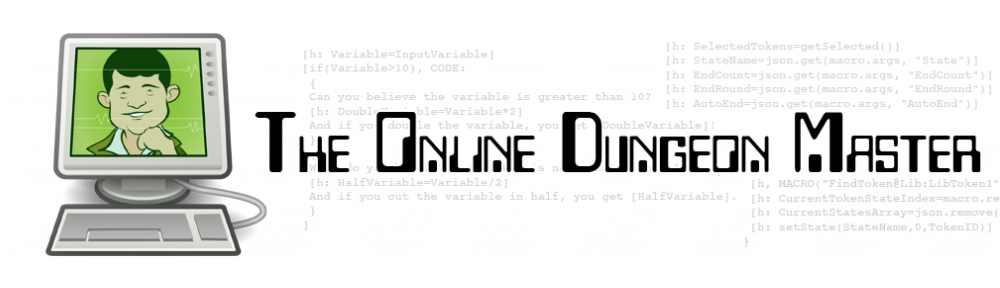
The encounter map, with a grid
Critting a minion

Yesterday’s post talked about what happens when a minion scores a critical hit on a PC. When I shared this on EN World, one of the commenters, Quickleaf, mentioned that the title of the EN World thread made him think I was going to be talking about what happens when a PC scores a critical hit on a minion.

What a fine idea!

As with minions scoring critical hits, there’s nothing in the rules to say that anything special happens when a player scores a critical hit on a minion. If you crit a minion, well, that’s a wasted crit (unless your character gets some kind of special benefit every time you score a crit, which some do). That’s kind of a disappointing feeling, and I think that scoring a critical hit shouldn’t lead to disappointment.

Another poster on EN World, FireLance, posted some cool critical hit table ideas that could apply any time a PC rolls a crit, not just when it’s against a minion. The ideas I came up with specifically for critting a minion are below.

Proposal 1: Crit a minion, gain an extra standard action

I like the idea of this house rule because it lets you “get back” the attack that you “wasted” on the minion. Sure, you wasted your rare crit on a creature that would have died if you had dealt minimum damage, but now you get to attack something else.

If I were to use this house rule, I would only have it apply to critical hits on minions where the minion was the only target of the attack. If you drop an area of effect on a bunch of minions and crit one of them, I’m not going to grant another standard action just because one of your five rolls came up as a 20. However…

Proposal 2: Crit a minion, kill another minion

I like this idea a lot, frankly. If your attack has enough oomph to kill one minion with extra oomph to spare, why not take out another one? Obviously, this is only plausible if you’re doing an area of effect attack where some minions were missed, or if it’s a melee attack with another minion nearby. I suppose you could argue that a critical hit with a ranged attack could go straight through one minion and hit another

Proposal 3: Crit a minion, get a future benefit

Here, I’m thinking that you feel so good about yourself from utterly destroying that minion that you get a +2 confidence bonus to your next attack roll, or maybe 3 temporary hit points or something like that.

Proposal 4: Crit a minion, turn your next hit into a crit

This one attempts to balance out the universe for you. You wasted your crit on that minion, so we’ll call the next hit you get on a non-minion a critical hit. Seems a little overpowered to me, but I can follow the logic.

Proposal 5: Crit a minion, recharge something

Here, you either get back an action point or an encounter power (certainly not a daily). From a balance perspective it’s probably okay, but the flavor doesn’t really work for me.

Summary

If I were to adopt a “crit a minion” bonus rule, I’d go with a combination of proposals 1 and 2. The theme should be that critting one minion counts as knocking off two of them, but if there’s no other minion available to go after, I’d still like there to be some benefit.

In the end, I like the idea of players getting to feel awesome when that 5% chance of a crit comes to fruition. Wasting the critical hit on a minion takes some of the fun out of it, so I’m going to try to make it worthwhile somehow. What do you think makes the most sense, if anything?

Minion critical hits

Somehow, I keep coming back to minions as a blog topic. I first talked about my love for two-hit minions, then later embraced the idea of using hordes of one-hit minions.

Today’s topic is a simple one: What happens when a minion scores a critical hit?

A normal monster gets to deal maximum damage on a critical hit (and you’ll occasionally see one that gets extra damage on top of that). Most minions, however, deal static damage (if they hit, they deal a flat 5 damage or something like that). What happens when they score a crit?

Well, technically speaking nothing happens when a minion scores a crit. They deal their regular old damage. But I feel like a critical hit (a natural 20 on the attack die for those who are confused by the terminology) is something special and should be more interesting (and deadly) than a normal hit.

For a while, my answer was for minions to deal double damage on a critical hit. If they normally hit for 5, a crit deals 10 damage, and so on. That works just fine, frankly, and makes minions a little more scary. I recommend doing something like this.

However, I’ve just started experimenting with a slightly different approach, thanks to the way I program my monsters in MapTool. My typical monster attack macro is as follows:

[h: AttackName="SingleTarget"]
[h: AttackBonus=0]
[h: Defense="AC"]
[h: NumDice=1]
[h: DamageDie=6]
[h: DamageBonus=0]
[h: DamageString="damage."]

[h: Enh=0]
[h: CritDamageDie=0]

[h: DamageRoll=roll(NumDice,DamageDie)]
[h: d20roll=d20]
[h, if(CritDamageDie > 0), CODE: 
 { [CritBonus=roll(Enh,CritDamageDie)]  }; 
 { [CritBonus=0] }
]

[h: AttackRoll=d20roll+AttackBonus]
[h: MaxDamage=NumDice*DamageDie+DamageBonus+CritBonus]
[h: RegularDamage=DamageRoll+DamageBonus]

<b>[AttackName]</b><br>
Attack: [d20roll] + [AttackBonus] = <b>[AttackRoll]</b> versus [Defense]<br>
[if(d20roll==20), CODE:
  {<font color=Red>--CRITICAL HIT--</font><br>
    Hit: [NumDice*DamageDie] + [DamageBonus] + [CritBonus] = <b>[MaxDamage]</b> [DamageString]
  };
  {Hit: [DamageRoll] + [DamageBonus] = <b>[RegularDamage]</b> [DamageString]}
]

For most monster attacks, I only edit the first seven lines (the attack name, attack bonus, defense it attacks, damage die, number of damage dice to roll, the damage bonus, and the accompanying text for a hit). For minions, I would usually edit this heavily to remove all of the business about damage dice and damage bonuses and just type the numbers into the bottom of my macro in the Hit line.

Then I realized I could save myself some trouble with minion attacks by setting the number of damage dice to zero and the damage bonus to the static damage. If you roll zero d6 and add 5, you always get 5 damage. Much easier!

The problem: Now I had no way to deal extra damage on a critical hit. However, my damage macro does allow for bonus damage on a crit – set Enh (equivalent to the enhancement on a magic weapon) to however many bonus crit dice the monster gets and set the CritDamageDie appropriately. Here, I stumbled across my new minion crit rule by setting Enh to 1 and CritDamageDie to the amount of static damage that the monster normally deals.

My new minion crit rule is that, if a normal hit deals X damage, a critical hit deals X + 1dX damage. So, a minion that normally deals 5 damage will deal 5 + 1d5 damage on a hit (somewhere between 6 and 10 total damage). Naturally, we don’t have 5 or 7 sided dice in the real world, but MapTool has no problem with this.

What do you think? Is it worth it to make minions deal extra damage on a critical hit? Is doubling their static damage on a crit too vicious? What about this new approach I’m toying with?

Heroes of Shadow – My Thoughts

I picked up a copy of Heroes of Shadow several weeks ago but only now got around to reading the thing. The content has been pretty thoroughly reviewed by others already, so I’ll try to be brief in sharing my thoughts.

Essentials or no?

First – is this an “Essentials” book? Well, that’s a meaningless distinction to me as I’m fine with PHBs and Heroes of… books at the table. But I understand where the anti-Essentials folks are coming from in referring to Heroes of Shadow as an Essentials book, because it never really acknowledges the existence of the Player’s Handbook options. The races and classes that are referred to in this book all appear either directly in Heroes of Shadow or in Heroes of the Fallen Lands or Heroes of the Forgotten Kingdoms. There’s no mention of goliaths, wildens, psions, shamans, etc.

That’s not to say there’s nothing that those races and classes can use in this book; the feats are open to them, as are the equipment options, epic destinies and many of the paragon paths. It’s clear, though, that Wizards of the Coast’s new books are designed to be friendly to players who aren’t familiar with the Player’s Handbook options and only know the Heroes of… books. This doesn’t bother me in the slightest, but I know it irks some people.

Fluff

The first chapter of Heroes of Shadow is fluff about the Shadowfell itself, the ways that characters might tap into shadow power, and the Raven Queen. Good stuff for role-playing and rounding out a character’s background. There’s also a lot of shadowy fluff spread throughout the book in all of the race and class descriptions, and even accompanying the various powers, paragon paths and equipment.

Classes

The classes introduced in Heroes of Shadow are the Executioner Assassin, the Blackguard Paladin, the Vampire (interestingly, no subclass name here) and the Binder Warlock. There are also new powers and the death domain for the cleric, new powers and the Gloom Pact for the Warlock (Gloom Pact is for the Hexblade Warlock only), new powers for the Wizard, and new schools (Necromancy and Nethermancy) for the Mage Wizard.

I won’t opine on the power level of any of these options, as I haven’t played with them yet. My main problem with them is that I just don’t dig the flavor of shadow… which means that I probably shouldn’t have purchased this book! I prefer my characters to be more straightforward heroic rather than dark, tormented anti-heroes or anything like that.

Of the classes presented, I think the Executioner Assassin seems kind of cool and the Blackguard Paladin doesn’t seem at all Paladin-like (he’s a striker rather than a defender). The Vampire is a class that offers no choices – your powers are pre-selected when you pick the class. It doesn’t appeal to me at all. The Binder Warlock seems fine, and if you’re already comfortable playing a Warlock I don’t see any reason that you wouldn’t enjoy this controller version (my wife just started playing one of these). The Cleric and Wizard options let you create a shadowy version of the basic classes, if that’s your thing. Some of the power options might be really strong, but again, that’s not really what I’m looking at.

Races

The races presented are the Revenant, the Shade and the Vryloka (basically a vampire). The Revenant is apparently unchanged from the version that was previously released on DDI (I never used that race, so it was still new to me). The Shade is a human that has embraced the shadows. The Vryloka is, well, a vampire. Meh all around.

Interestingly, there are several pages at the end of the race section devoted to Dwarves, Eladrin, Elves, Halflings and Humans who are “shadowy.” I was a little surprised not to see Tieflings here. It’s pure fluff, of course – examples of certain members of these races who have some connection to the Shadowfell.

Paragon Paths, Epic Destinies, Feats and Equipment

This is the chapter that cemented in my mind that I’m not the target audience for this book. I read through the paragon paths and found a couple of them to be pretty interesting. I have a 10th level Paladin for Living Forgotten Realms games who will soon be entering the paragon tier (my first paragon character), and I considered whether I’d want to take any of these paths. A couple of them had some interesting mechanics and flavor that was almost appealing… but then I saw something like a power that deals cold and necrotic damage. My good-aligned Paladin is not going to want to deal necrotic damage. If this were a home game I could re-fluff it, but not for LFR. And then I realized that if I’m thinking about re-fluffing a Heroes of Shadow paragon path, I’m doing it wrong. These options are for players who want to be shadowy. That’s not me.

One little bonus I’ll mention here is that the Ravenkin paragon path provides the character with a raven familiar. The interesting part is that this page includes the rules for familiars, which were previously only available in Arcane Power (they’re not in the DDI Compendium, frustratingly). So, if you’re a DDI user who’s been annoyed at not having the familiar rules at hand, you might have another reason to get Heroes of Shadow.

Overall

There’s a certain audience who will probably really enjoy Heroes of Shadow. Players who want to run dark characters with shadowy backgrounds now have a ton of options at their disposal. Those types of characters don’t feel especially heroic to me (I have trouble with PHB1 Warlocks, frankly), but that’s not an indictment of the book – it just means that I’m not the target audience. If you want a character who’s brooding and mysterious or perhaps flirting with evil, then you’ll enjoy the options in this book.

Me – I wish I’d passed. Oh well.

Reavers of Harkenwold Maps

Edit: This post was updated on 5/14/2011 to change the maps to a 50 pixel per inch scale and to provide gridless versions of the maps (which, frankly, are the better choice for dragging into MapTool or Fantasy Grounds or whatever you use). Also, if you want the full MapTool file for this adventure, go here.

I ran the Reavers of Harkenwold adventure from the Dungeon Master’s Kit using MapTool over the past few months and had a great time with it. In the process, I needed to create MapTool versions of these maps, and I thought that others who are running the adventure using online tools might be able to make use of them. Enjoy!

Each map can be clicked for a larger version, and the printable PDF links for each map will bring you to a version that is formatted in printable one-inch square scale

Main overland map (printable PDF)

Road with wagon (printable PDF)

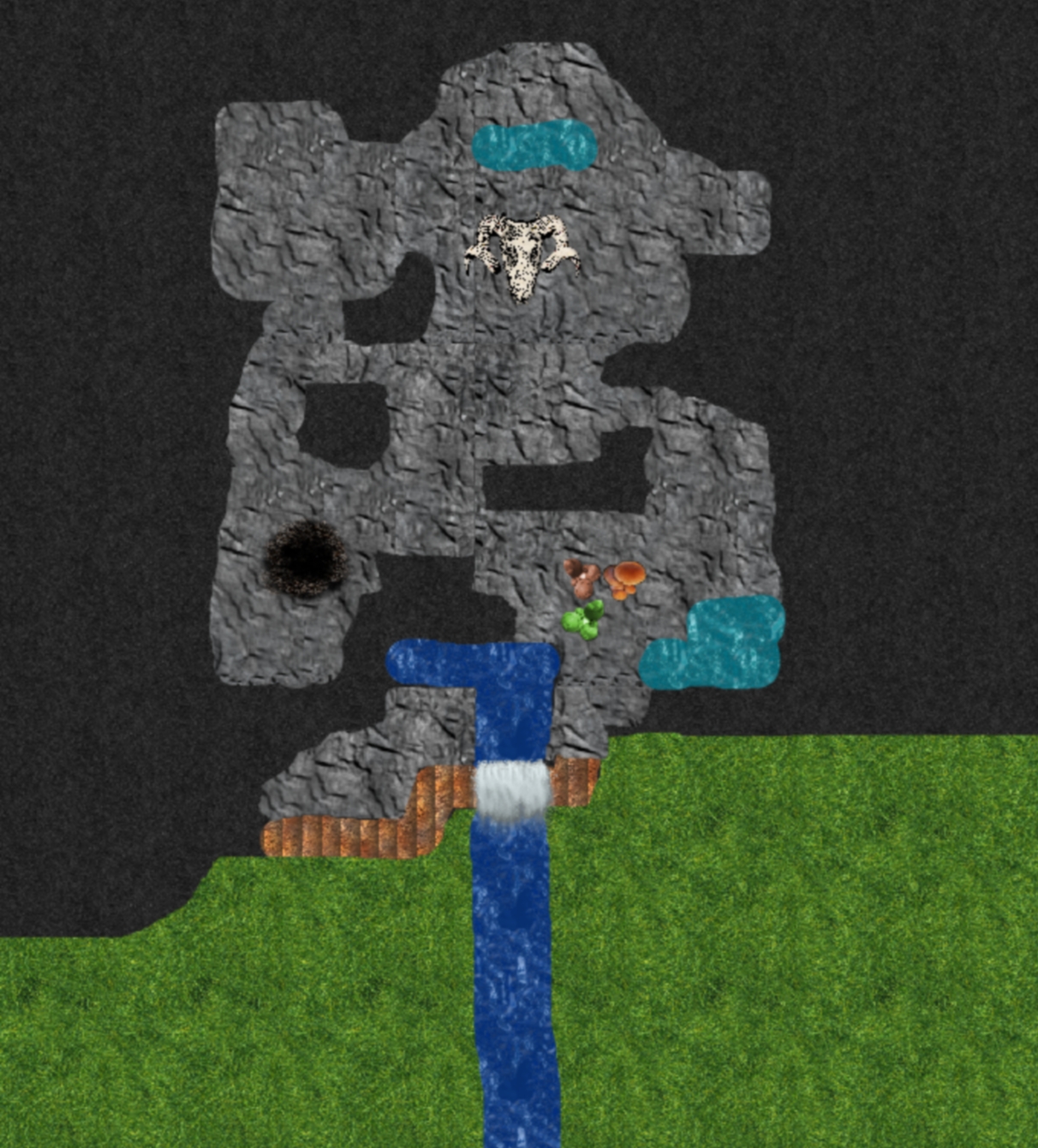
Toadwallow Caverns (printable PDF)


Ring of Stones (printable PDF)

Underground Lab (printable PDF)


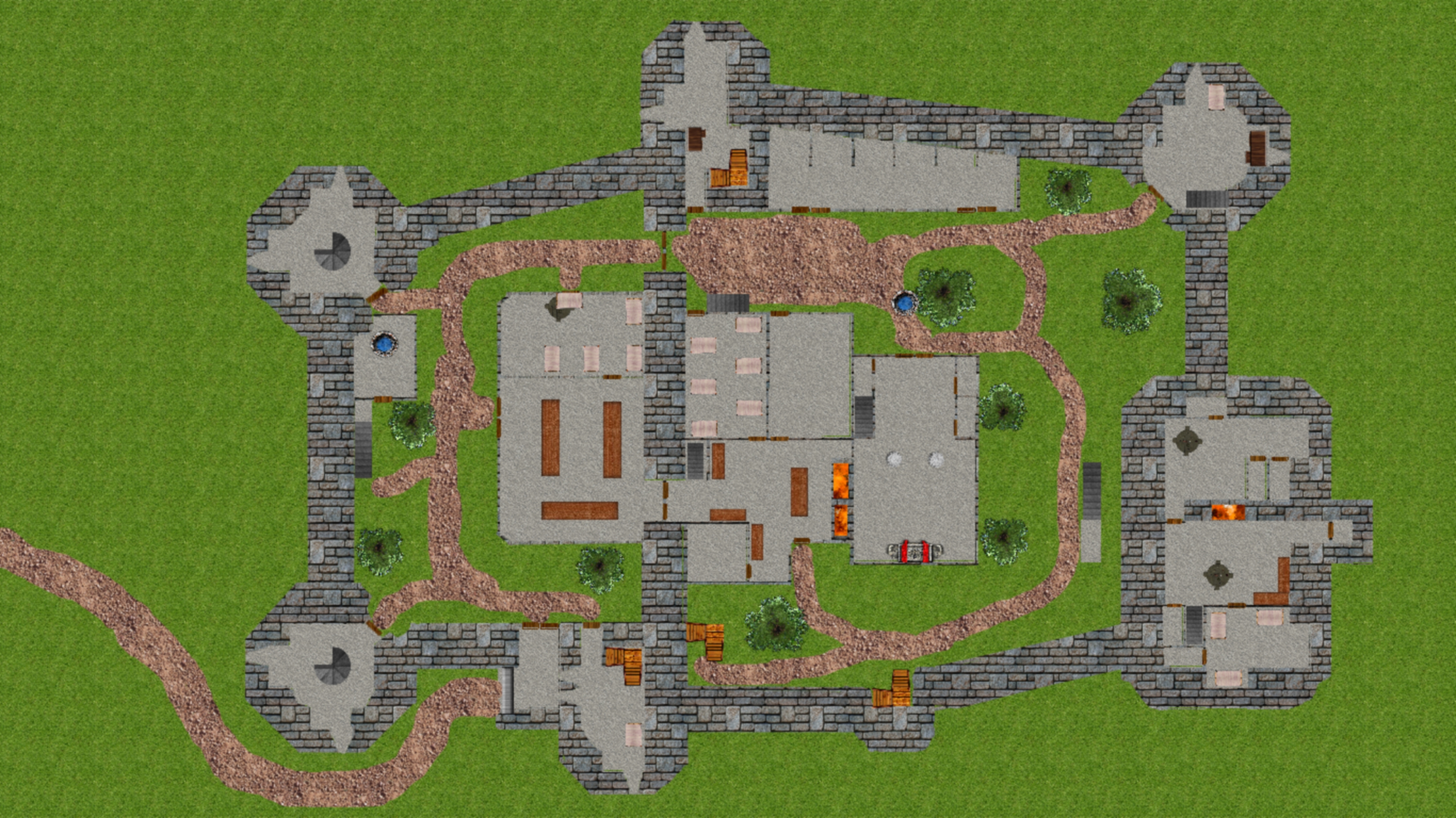
Iron Keep main level (printable PDF)


Iron Keep second and third floors (printable PDF)

Third Floor

Review: Reavers of Harkenwold

Last week, I finished running my family campaign (my wife, her brother, and his wife) through the adventure from the Dungeon Master’s Kit, Reavers of Harkenwold.

I should start with a big, public “thank you” to Jeff, the owner of my friendly local game store, Enchanted Grounds, for loaning me the adventure from the store copy of the DM Kit, gratis. I had no need for the DM Kit book (I already have the Dungeon Master Guides 1 and 2) nor the tokens (I use my MapTool / projector setup for gaming), so I just couldn’t justify spending the money on the entire DM Kit just for the adventure. Jeff loaned it to me on the spot. Great guy, great store!

The Reavers of Harkenwold adventure is, in a word, excellent. It is presented in two separate magazine-type books. The first begins with a thorough overview of the plot of the adventure in both a super-brief format (here are the three or four major points of the plot) as well as a longer format for book 1 that goes over the flow of that section. It continues with some possible adventure hooks, detailed descriptions of the locations the PCs might visit in the adventure (complete with names of shops in towns and so on), and then descriptions of the non-player characters that the party might meet (including their motivations and role-playing tips for the most important NPCs). It then moves into the various encounters that the PCs may meet. Book 2 starts with the plot overview for that book, and then the encounters.

SPOILERS AHEAD. If you plan to play this adventure as a PC and you want to be surprised, I suggest you stop reading now.

The plot is straightforward, in a good way: Free a region of innocents from an evil outside army that has taken over. The players need to gather allies, fight in a large military battle, then infiltrate a keep. Book 1 contains the background material and the allies-gathering, while book 2 has the big battle and the keep.

I ran the game using MapTool online for a party of three PCs. My players were a level above the recommended range for the adventure, so I mostly left the numbers alone (higher-level PCs, but fewer of them than recommended), and it worked out okay. The only encounter that was TOO brutal, in my opinion, was Encounter D4: Yisarn’s Lair from the end of the first book. I removed the traps and one of the monsters from that battle and it was STILL too hard (the players retreated and came back the next day with an elf ally).

There is plenty of information in Reavers of Harkenwold for a party that loves role-playing to really get into the world and its people and their problems. However, that is not the kind of group that I have. My PCs prefer to get into fights and kill bad guys, and this adventure worked just fine for them, too. The order that they ran into the encounters was:

  • E1: Ilyana’s Plight
  • A little role-playing with Reithann, leading to Tor’s Hold
  • T1-T2-T3: The bullywug caverns
  • A little role-playing at Tor’s Hold, then on to the D1 to meet the Woodsinger Elves
  • D2-D3-D4: Liberating the underground lair for the elves
  • D4 again: The party retreated the first time and got a Woodsinger Elf to help them the second time (I made up a simple companion character)
  • E4: Hunted! on the way to Albridge
  • A little role-playing, leading into B1: Battle Plans
  • B2-B3-B4: The Battle of Albridge (Nazin fled when his minions dropped, and just barely got away, even with his action point)
  • Some role-playing to visit Old Kellar in Harken to learn about the Keep, then back to Albridge to talk to Dar Gremath about plans, then back to Harken for the infiltration
  • K1: Infiltrating the Keep. The PCs decided to pretend that one of the PCs was the sister of a Harkenwolder who had joined the Iron Circle and died in the Battle of Albridge, and she had been sent to collect his personal effects from his barracks. I ran this as the “Iron  Circle Poseurs” version of the challenge, more or less, and they succeeded (barely).
  • The party was escorted to the barracks in room 6, where they killed their escorts, went into the empty banquet hall (room 5) and then into the kitchen (room 15) where the servants tried to help.
  • K5: The Great Tower entrance
  • K7: Lord’s Chambers
  • K6: Gaol (after Nazin had already been defeated; the PCs produced Nazin’s head and I had the Mage therefore flee

So, I never ran E2, E3, K2, K3 or K4, and that was absolutely fine. It was refreshing to me that the adventure had more encounters than were required – it made me feel okay about not using all of them.

My players had a good time with the adventure, although they’re rather easy to please – let them kick some butt, and they’re happy. I think a party that likes more plot and role-playing and opportunities for creativity could also get a lot out of this adventure. The back story and information about all of the people and places is really well presented, and I think DMs can find a lot to make use of.

D&D Essentials: The sky has not fallen

I originally reviewed the first D&D 4th Edition Essentials book, Heroes of the Fallen Lands, shortly after it was released in September 2010. I’ve gone back to re-read my review, and I still completely agree with everything I wrote back then.

In a nutshell, the Essentials books presented some new build options and new feats and generally felt to me to be pretty much like any expansion books that Wizards of the Coast had published for D&D4e (Martial Power, Arcane Power, Player’s Handbook 2, etc.). Good new options; maybe not every player would use every option, but some would probably come in handy.

Lots of people in the online D&D4e community were worried about the Essentials books – was this a new half-edition? But I think most of that concern dissipated in the end.

Thus, I was surprised when I read Neuroglyph Games’s review of the new Heroes of Shadow book over on EN World (plus the somewhat different version on their blog) and the follow up conversation on the Neuroglyph Games blog. The review of the material was fine and useful (I just got the book today, in part because of the positive review), but the author made it clear that he saw this as an “Essentials” book and was therefore seriously considering excluding it from his no-Essentials campaign (which he referred to as “Traditional 4e” or “Core 4e”). From the poll on his review, he’s not alone – there are apparently a significant number of DMs who run “no Essentials 4e” games.

This baffles the heck out of me. I could understand excluding a book from my table if I feel that it’s inappropriate for the game I’m running, perhaps. Heroes of Shadow, for instance, is probably not going to come into play very much in the games I run because it seems to be aimed more at “dark” campaigns where PCs may be flirting with evil alignments, and that’s not the kind of game I tend to enjoy. That said, I would still allow material from the book if a player asked and it seemed to fit within the campaign.

My approach to DMing is to let the players make the choices they like, but to retain veto power. If a player picks a race that doesn’t fit in my world, I’ll let them know that and ask them to pick something else. If they pick a power that I feel is overpowered relative to the rest of the table, I’ll ask them to pick something different. If they make choices that just don’t make any sense with the rest of their character concept, I’ll ask them to change those choices.

It’s very rare that I ever exercise this veto power, and I’m always very nice about it, trying to work with the player to help them find something that both works within the game I’m running but also makes them happy.

All of this is a roundabout way of saying that I personally feel that excluding books entirely is a pretty silly way to run a game, unless every single thing in the book is completely out of line with a particular campaign. I have a hard time imagining that the Heroes of the Fallen Lands and Heroes of the Forgotten Kingdoms books would be completely out of line with very many D&D 4e campaigns, and I gather that the DMs who exclude them are doing so out of protest against WotC business practices, specifically a feeling that WotC has tried to sneak a half-edition by us without being forthcoming about what it really is.

I think it’s fair to disagree with WotC business practices or misleading statements and to not support the company because of it. But these DMs seem to want it both ways – they want to protest WotC’s behavior but still purchase WotC releases that are “non-Essentials.” I just don’t get it.

If a DM wants to run a non-Essentials game, they can absolutely have a lovely time running a game using all of the material that was published before September 2010 – there was a ton of great stuff already published at that point. Everything published since then will have been written with the existence of the Essentials books in mind, just as material written in the summer of 2010 was written with the existence of Martial Power 2 and Player’s Handbook 3 in mind. To expect WotC to publish books that ignore the existence of Heroes of the Fallen Lands and Heroes of the Forgotten Kingdoms is silly, in my opinion. Why would they do that?

Essentials is not D&D 4.5. It’s a bunch of new options, some of which you might love and some of which you might think are a waste of time. I honestly don’t understand why there is so much emotion around this topic. I’m not a DM who feels that the Heroes of… books are the greatest things written for D&D 4e or anything like that – they’re simply fine options, much like PHB2 and PHB3. I don’t see anything disturbing or objectionable about them that would lead me to consider banning those books and everything published in their style from my games. And I truly don’t understand DMs who feel strong, negative emotions about these books.

I wasn’t around for the 3.0 to 3.5 Edition Wars, nor the 3.5 to 4.0 Edition Wars. Maybe I just don’t get it. I’m pretty sure that I don’t want to get it!