Making the Game part 2 – Outside playtesting and adding a theme

Previous entry: Part 1 / Next entry: Part 3

Welcome back to my blog series Making the Game, in which I talk about the process of creating my card and dice game called Chaos & Alchemy! In Part 1, I discussed the inception of the idea for my game and the first prototype I built and played with my wife.

Two days after the inception of my game, I found myself getting together with some acquaintances for a public playtest of D&D Next, which had just become available for testing about a week earlier. We had a little time to kill before one of our players would be showing up, so I broke out the cards that I had printed up and tried the game with them.

One of the guys totally got it. The other was pretty confused, but soldiered on. It was encouraging enough for me to feel like I should keep working on the game, but I knew that I needed it to have an actual theme rather than raw mechanics. My wife had already suggested something fantasy-ish, and I liked the idea of alchemy for some reason.

I spent a fair amount of time on Sunday, June 3, changing the generic names of cards like “Draw 2” and “Roll Extra” into things like “Quick Study” and “Oversized Cauldron”. I changed the references of cards being “in play” to being “in your laboratory”. A theme was taking shape!

Talk to the pros

I’m lucky to have a good friend who has worked for many years as a professional game designer on board games, card games and computer games, and I got together at his place with him and another friend of ours Sunday evening, June 3, to playtest the heck out of my still-nameless game. I didn’t realize that these guys would be up for three hours of solid playtesting, but that’s exactly what we did.

This was real playtesting at its best. We tried the game as I’d originally designed it, then talked about what was working and what wasn’t. In the initial rules, players had three things to do each turn: draw a card, play a card, and run an experiment (rolling a pair of dice) which could result in extra card draws and plays or in some forced discards (or a mixture). We started toying with this, going to a single draw/play option each turn and adding an extra die to the experiment (now rolling three dice instead of two). This changed things dramatically, making it much more likely that the target die (now renamed the Fortune Die) would change with people rolling doubles since doubles come up a lot more with three dice than with two.

We started focusing on what was fun in the game and what wasn’t. At this point, the main way you could win the game would be to get to 10 points by holding a bunch of cards in your hand – each card in hand was worth a point. This was rather unfun; playing cards to the table was cool and exciting, but just hanging on to a bunch of cards felt kind of lame in comparison. This was a change that would have to be handled at the drawing board rather than at the table, though.

Another issue that caused problems was that the game ended rather suddenly and randomly a lot of the time. If your opponent goes from 5 points to 10 points via a lucky turn, well, that’s it. I started experimenting with rules that said, “If one player ends his or her turn with 10 or more points, each other player gets one turn and then the game ends.” This had the problem of making it BAD to be the first to 10, since everyone else would dump on you. Tricky.

I left that evening with tons of notes and useful feedback, and I got to work. Changing the point mechanism from cards in hand being the main victory condition to cards in hand being worth nothing was surprisingly easy. Lots of cards that previously were played, had their effect and then went to the discard pile became cards that came into your laboratory, had an effect when they came into the lab, and then sat there for the rest of the game being worth a point or two.

Long-distance playtesting

I had sent a file with the cards and rules to my brother in Pennsylvania (I’m in Colorado) after the first night of inventing the game, and I sent him an update the following Monday morning to give him the improved cards with a theme and everything. Imagine my surprise when he said that he had already tried out the mechanics-only version of the game with his fiancee and another friend, and that they liked it! More awesome playtest feedback filled his email, and the game kept getting better.

Having people in other parts of the country playtesting my game would prove to be a constant, useful tool throughout the rest of Chaos & Alchemy’s development.

More to come…

I’ll wrap up this installment of Making of the Game here, with another request for feedback: Is this stuff interesting to my readers? I know that I personally would have enjoyed reading about other peoples’ experiences with game creation when I was getting started, but I might be the only one!

-Michael the OnlineDM

OnlineDM1 on Twitter

P.S. For those of you who are interested in the game itself, I now have an Art Gallery page up on the main site!

Making the Game part 1 – Inspiration and first prototype

Next post in series: Part 2

Welcome to my new blog series – Making the Game. In this series, I’ll talk all about the process I’ve gone through (and am still going through) of creating a game and ultimately producing and selling it. In this particular case, I’m talking about my upcoming card and dice game – Chaos & Alchemy.

Chaos and Alchemy logo – by Bree Heiss

Inception

It all started on May 31, 2012. I was driving home from work, listening to gaming podcasts (as I often do), and I happened to be listening to an old episode of Jennisodes. In this episode, Jenn had recorded a panel of game designers at a conference, and Fred Hicks mentioned something about a game possibly being based around an innovative dice mechanic (nothing specific – he was just saying that an innovative dice mechanic is something that can make a game interesting, and that he might have a file with nothing but dice mechanics).

I don’t know why, but this comment got me thinking. I originally was thinking about role-playing game dice mechanics here, and I thought of a mechanic where checks are resolved by rolling two six-sided dice, each trying to meet or beat a target number. If they’re both over the target number, you have total success. If they’re both under, it’s total failure. If one is over and one is under, it’s a partial success. I was thinking that a tie counted toward success at this point, but I wasn’t sure.

This seemed like it had some potential, but I soon decided that it wasn’t all that interesting for a role-playing game (although if anyone builds a role-playing game around this mechanic, I’d love to hear about it!). Something more like a board game, though, might work.

What would the target number be? I liked the idea of having it change throughout the course of the game, and having a shared die in the middle of the table that people are trying to meet or beat. This would be the “target die”. The game could work with cards, and beating the target die would let you draw cards or play cards while rolling under the target die would make you discard. Rolling doubles would make you re-roll the target die.

First prototype

Yeah, this was going somewhere! When I got home from work, I mulled this over as I cooked dinner for my wife, then decided to start making up some cards. Since I use Excel all the time at work, I decided to make up a little card template in Excel. One cell would hold the card name, the next cell would tell what you do with the card after you play it, and the third cell would have the rules text for the card. I messed around with the spacing a little bit and ended up with twelve cards to a page – four cards in each of three rows.

Actual examples of some of my initial playtest cards

Since this was a Thursday, which was my volleyball night at the time, I took a break for a while to go play volleyball. When I came back home, I finished putting together a few more cards (32 cards total), printed out 4 copies of each card, cut them up with my paper cutter and dropped them into sleeves with Magic cards (I just grabbed a few completed Magic decks from years ago that all had the same backs).

I talked my wife into trying the game out with me. We shuffled the giant deck of cards, drew two cards each, and started playing. At this point in time, the goal of the game was to get to 10 points, and each card in your hand counted for a point. The cards had names like “Draw Two”, “Take Random” and “Change Target”. There was no flavor at all – just mechanics.

And it was fun. Surprisingly fun!

I had just created a game from nothing, and it was actually fun for me and my wife to play. I decided it was worth continuing to develop it.

Next steps

From that point, development on my game continued, and I plan to talk more about this in future blog posts.

I want to ask at this point: Is this interesting stuff for my readers? I’m still playing D&D and will continue to write about it, but a lot of my free time is going to Chaos & Alchemy right now, so I’d love to share it if you’re interested.

-Michael the OnlineDM

OnlineDM1 on Twitter

Owner of Clay Crucible Games LLC

Cruise ship D&D

There were no new blog posts for me last week because I was on vacation, taking a Caribbean cruise. My wife and I went with some friends of ours and had a lovely time, getting to spend time in Puerto Rico, Saint Maarten and Saint Thomas.

We also had several days at sea, so I naturally brought along some games to play. During one of the sea days on the way out to the islands I managed to persuade one of our friends to play San Juan with us, the card game version of the Puerto Rico board game. It was definitely in-theme for the cruise, and we had a nice time with the game.

On the way back from the islands, I mentioned D&D at lunch and was pleased when the woman in the couple we were traveling with asked about the game. She really knew nothing about it, but she knew that I really liked it and that my wife played, too, so I started describing D&D to her.

D&D is ultimately a cooperative storytelling game. Each player has a character that they get to play, and they have a sheet of paper with information about that character, explaining what the character can do. The dungeon master describes a situation that the players’ characters find themselves in, and then it’s up to the players to tell the DM what their characters do. If it’s something straightforward, like “I walk over that way,” then the DM just narrates the result. If it’s something that the character might or might not succeed in doing, like “I scramble up that tree,” then the DM might ask the player to roll some dice and determine the result of the action based on the result of the die roll.

D&D is a fantasy game, like the Lord of the Rings, and the players get to play the heroes. This means that they’ll probably find themselves in combat with bad guys from time to time, and the game has rules for taking turns in combat, attacking enemies, getting hit by enemies, and yes, even death.

Given that description, my friends were interested in learning to play. Fortunately, I had come prepared!

Usually I run D&D games using my laptop and a projector. While I did have my laptop with me on the cruise, there was no way I was bringing my projector rig. Instead, I had grabbed the Dungeon Master’s Book from the Essentials Red Box set, along with the poster map and the sheet of tokens that came inside the Red Box. I also brought the pre-generated characters from D&D Encounters, which I had from last summer, and a container of dice.

The Red Box adventure, The Twisting Halls, assumes that the players start off by going through the solo adventure in the player’s book, creating their characters that way. I wanted to get the new players into the action as fast as possible, so I just gave them pre-gens and a little back story.

The adventure began with the party having been hired by a merchant to go to some goblin caves to recover a box that had been stolen from the merchant. The merchant also mentioned that he had seen a scary dark rider and thought that the rider might be involved. That was it for story; off we went into the first combat with two goblins and a wolf (scaled down from two wolves since we only had three PCs).

D&D in the ship's cafeteria. Note the ice cream bowls full of dice. Awesomeness.

Our first combat went smoothly enough, with the new players getting a feel for what their characters could do. They won the fight without much trouble and then sent their drow ranger down into a passageway to scout ahead. She was very stealthy and saw a couple of goblins standing in a room, not noticing her.

She asked, “Can I shoot this one?” Well sure! Surprise round, go for it. And thus began the second combat, with the rest of the party still at the top of the tunnel.

This combat was intentionally harder. I ran the full combat for four PCs, but I did it in waves. In the first few rounds, the players noticed someone peeking out from behind a door that was ajar, and the door later closed. Then, as combat with the goblins and their guard drake was almost over, a goblin spellcaster came out from behind a closed door and started blasting the party with magic.

My wife’s character, the cleric, spent some time making death saving throws, one of which fortunately ended up on a 20. From there, the party was able to handle the fight with no problem.

At this point the party discovered a little treasure, and I decided to call it a day. I could tell that our friends were starting to get a little tired, and I didn’t want to overwhelm them.

I was a little disappointed that I had picked an adventure without much real exploration or role playing at the beginning; we basically just had two fights and that was it. I’d like to give new players more of a sense of adventure, so that was a mistake on my part. But still, I was glad that my friends were intrigued enough to give them game a shot. We’ll be visiting these friends in Minnesota in a few weeks, and I’ll bring my D&D stuff along, just in case!

-Michael the OnlineDM

Lords of Waterdeep, and a break to build MapTool macros

I don’t usually go multiple weeks without a post here on Online Dungeon Master, so I thought I’d give my loyal fans an update.

I’ve been traveling for work a lot in the past  couple of weeks, which certainly interferes with blogging time. However, I HAVE been using the time for D&D stuff – specifically MapTool work. You may recall that I had built and shared some macros for quickly creating monster powers a few weeks ago. Well, I’ve been working on the same thing for PC powers in D&D 4e. It’s been tremendously time consuming to build the macros, but actually using them has been fast! (Aside from bug killing, that is.)

Three of the players in my long-running Friday night War of the Burning Sky campaign created new characters for last week’s game (one new player, two existing players switching to new characters), so I had the chance to put my new PC power creation macros through their paces. I’m pleased to say that they worked like a charm! No problems at all so far, and the ability to recharge a power with a button click has been awesome.

The next step is to add a character sheet frame, similar to what I’ve done for Marvel Heroic RPG. I’d love for my D&D players to be able to scroll through their powers in a custom frame rather than the buttons in the Selection window. I could include the rules text of the powers in a small font, links to recharge powers individually, some nice-looking tables for organization purposes, and so on. But for now I still have a little tweaking to do on the PC power creation, though I hope to start sharing pieces of it soon. It’s a complicated family of macros, and I have not yet figured out how to break it into blog-post-sized chunks.

I haven’t run Madness at Gardmore Abbey in the past few weeks, which is a bit of a bummer. I finally have that whole campaign prepped in MapTool, so I’m ready to go at a moment’s notice! But the timing hasn’t worked out with my players.

I was going to try to revive my ZEITGEIST campaign for today’s gaming session, but two players had to bow out at the last moment. The day wasn’t a total loss, though, since the rest of us used the time to play three games of Lords of Waterdeep!

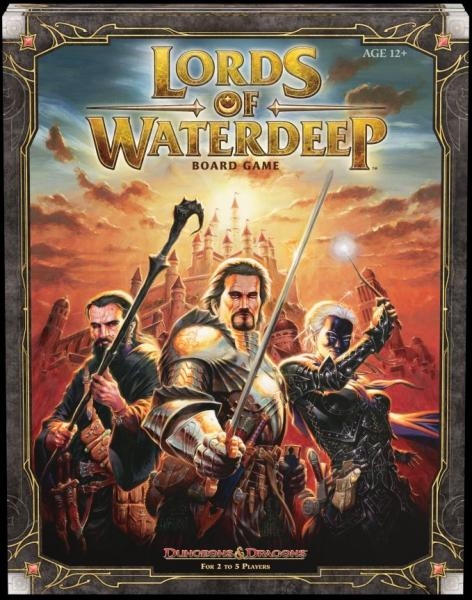
I’ve played a total of five games of Lords of Waterdeep now, and I absolutely love it even though I haven’t won yet. LoW feels like a streamlined fantasy setting of Agricola, another game that I absolutely love. We haven’t discovered a “dominant strategy” yet, which is a good thing. I love the design of the box itself – there’s a great insert to organize all of the pieces. The rulebook is excellent, too – very clear, with a handy summary of the rules on the back cover. It’s tons of fun, and everyone who has played it so far has loved it. I highly recommend Lords of Waterdeep.

I’m going to be out of town on vacation starting next weekend, so I hope to get another post or two up before I go. But if not, don’t expect to see anything from me until late April.

-Michael the OnlineDM

Lich Chess: Sacrifice your king!

Sometimes I’m at the computer doing D&D prep work, and I want to take a quick break. Nerd that I am, I’ve often found myself playing a game or two of the Chess Titans program that came with Windows 7. I’m happy that I generally win when I play on level 3; I’m sad to know that it’s level 3 out of TEN. Yeah, I’m not a chess master.

Anyway, lots of role playing gamers are familiar with chess, so I’m sure I’m not the only one who’s had fantasy RPG thoughts about the game. I was recently thinking about the rule in chess that allows you to promote a pawn to any other piece in the game if it reaches the far side of the board. I had two main thoughts about this:

1. You’re pretty much always picking a queen. I mean sure, there might be a corner case where you want a knight, but a queen can do everything that a bishop or rook can do, only better.

2. You can’t pick another king.

That second point got me thinking about D&D. What would happen if you had a second king? Would your opponent have to kill both of them in order to win? That was a fun idea, but it’s still going to be better to opt for offense (a queen) over defense (a second king). So, even if it were an option, it would hardly ever be taken.

The concept of having a back-up king intrigued me, though. The main thing that this would allow you to do would be to sacrifice a king. You never get to do that in normal chess, of course. It would be interesting if you could.

This eventually led me to think about Lich Chess. In this rules variant, each player’s king is a lich, which can’t truly die unless its phylactery is also destroyed. Maybe I’ve been reading too much Order of the Stick or something. Once I started thinking along these lines, I thought of several variants you could try.

Lich Chess variant 1: Secret phylactery, vulnerable lich. Before the game, each player secretly designates one piece as the phylactery bearer (probably easier to do in a virtual chess game, but you could perhaps outfit each piece with a sticker on the bottom that you could mark on to show which one is the lich each game – or just write it down on a piece of paper). If the phylactery bearer is captured, the information is revealed and the king has no backup plan any more. If the king is captured but the phylactery bearer is not, the game continues until one side’s king and phylactery bearer are both captured. Either the king or the phylactery bearer can be captured first.

Lich Chess variant 2: Secret phylactery, indestructible lich. As with variant 1, except that the king is invulnerable until the phylactery bearer has been captured. Now the king goes on offense – not even the opposing queen can take him down!

Lich Chess variant 3/4: Revealed phylactery, vulnerable/indestructible lich. A visible token marks the phylactery (I’m picturing a little ring to put around a piece). Any piece can hold the phylactery at the beginning of the game. On your turn, either before or after you move, you may move the phylactery from the current bearer to any adjacent piece (including the king itself if you wish). Pass the phylactery! This can be done with the “either piece can be destroyed first” variant or the “indestructible lich” variant, where the phylactery has to be captured first.

Lich Chess alternate rule 1: Limited bearers. Designate only certain pieces as being eligible to bear the phylactery (whether secret or revealed). For instance, it has to be a pawn or it has to be a knight/bishop or whatever. Especially in the “revealed phylactery” variant, there’s probably a lot of temptation to just give the queen the phylactery since she can defend it pretty well. This mixes things up a bit.

There are probably other tweaks you could make to this game, too. Personally, the most interesting variant to me is number 2 – indestructible lich, secret phylactery. I just love the idea of the king wading into battle, lopping heads off of knights and bishops until the phylactery is discovered.

Now, I haven’t actually tried these rules yet, but they sound interesting to me. If anyone out there gives them a whirl, let me know how it goes!